

Tragic Spain Train Crash Claims 39 Lives in Adamuz
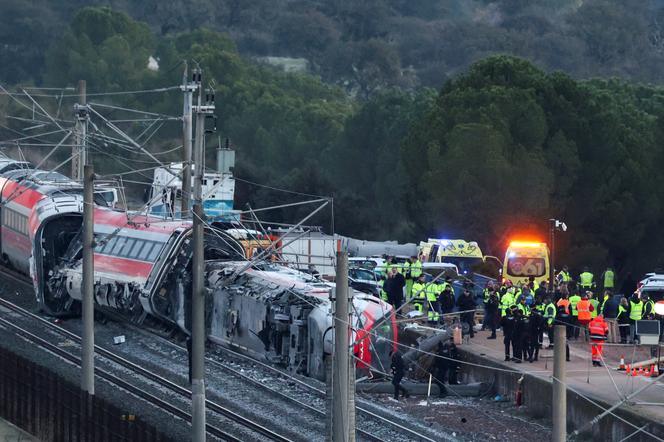
Devastating Collision in Southern Spain
On January 18, 2026, two high-speed passenger trains derailed in Adamuz, Andalusia, Spain, killing at least 21 people and injuring over 100 others, including more than 25 gravely. However, the death toll has since risen to 39, with expectations it may increase further as cranes begin removing carriages. The tragedy unfolded when the first train derailed shortly after stopping at the Córdoba-Julio Anguita station at approximately 7:39 p.m. local time, while traversing a railroad switch, crossing onto the opposite track. Consequently, the other train traveling on the parallel track in the opposite direction also derailed, and one of the fatalities was its driver.
Emergency Response and Human Toll
Officials in Andalusia launched a large emergency response, involving firefighters, police and a military emergency unit in response to the crash shortly after 7.30pm Sunday. Many passengers remained trapped in the hours that followed, with video footage showing rescuers working to free them in pitch-black conditions. Eleven adults and one child are in intensive care, in critical condition. Seventy-five passengers were hospitalized, with most taken to Córdoba, about 390 kilometers south of Madrid.
Investigation and National Mourning
Spain’s Transport Minister Óscar Puente said the cause of the crash remains unknown, but added it was “extremely unusual” as it happened on a straight stretch of track which had been recently renovated and the train was relatively new. Spanish Prime Minister Pedro Sanchez promises a “thorough and absolutely transparent” investigation into the crash, declares three days of mourning. The incident represents the worst accident on Spain’s railways since the Galicia crash in 2013 when 79 people were killed and 144 injured.
Impact on Spain’s Rail Network
The Civil Guard has confirmed the suspension of high-speed rail service between Madrid and Andalusia for the entire day of January 19. This disaster has shaken public confidence in what has been regarded as one of Europe’s safest transport systems. Spain has the largest high-speed rail network in Europe for trains moving over 250 kph, with more than 3,100 kilometers of track. As investigations continue and families mourn, this tragedy serves as a stark reminder that even advanced infrastructure requires constant vigilance to ensure passenger safety. The coming weeks will be critical in determining what caused this catastrophic failure and how similar disasters can be prevented in future.