

Comet ATLAS 3I Makes Historic Close Approach to Earth
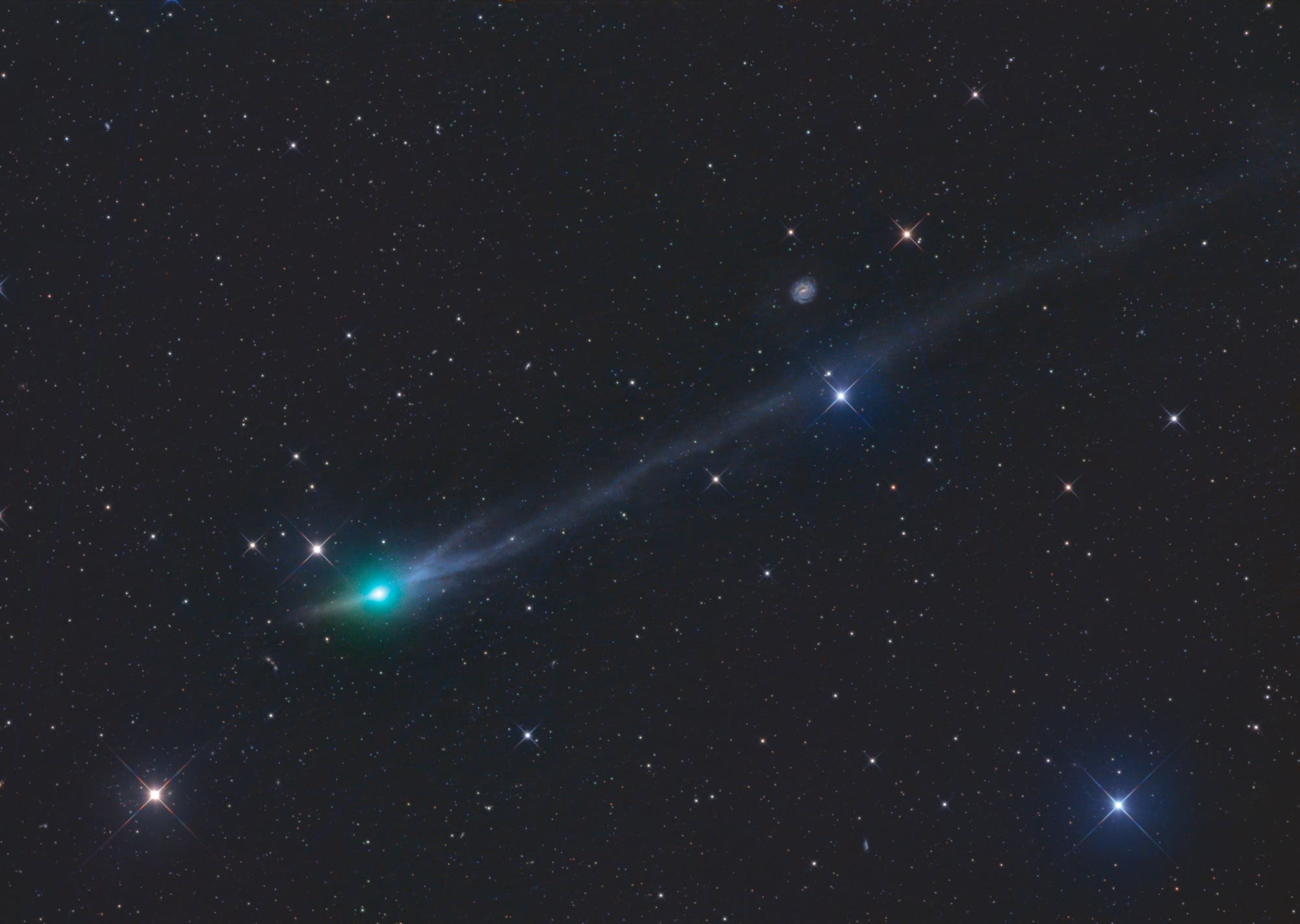
A Rare Interstellar Visitor
Comet 3I/ATLAS, the third confirmed interstellar object in history, was discovered on July 1, 2025. This remarkable cosmic traveller has captured the attention of astronomers and the public alike as it journeys through our solar system. Interstellar comet 3I/ATLAS reaches its closest point to Earth on December 19., marking a significant moment for astronomical observation and scientific research.
The importance of this event cannot be overstated. This dirty snowball is a visitor from another solar system, and it’s only the third interstellar object we’ve ever spotted. Unlike comets bound by the Sun’s gravity, 3I/ATLAS is traveling on a hyperbolic orbit that eventually will carry it out of the solar system and back into interstellar space.
Scientific Observations and Discoveries
Since its discovery, 3I/ATLAS has been the subject of intense study by space agencies and observatories worldwide. At its closest point to Earth, 3I/ATLAS will be about 270 million km (170 million miles) away—a little under twice the distance between Earth and the Sun. Despite this considerable distance, powerful telescopes including the Hubble Space Telescope, the James Webb Space Telescope, and the Gemini Observatory have captured stunning images and valuable data.
New images taken with the Gemini North telescope in Hawaii confirm that the interstellar comet 3I/ATLAS has gotten brighter and greener since its close flyby of the sun in October. Among the gases spilling out of 3I/ATLAS is diatomic carbon (C2) — a molecule of two carbon atoms that emits a greenish light, creating the comet’s distinctive appearance.
Having likely spent billions of years in interstellar space, 3I/ATLAS started to warm up as it approached our Sun on its journey through the inner solar system. For astronomers analyzing the comet’s chemical makeup, this created a race against time as possible clues about the comet’s interstellar origin began to turn into gas and disappear into space.
What Makes 3I/ATLAS Special
Observations of 3I/ATLAS’ speed and trajectory confirmed to astronomers that it formed in another star system and was ejected into interstellar space – the region between the stars, according to NASA. For possibly billions of years, the comet has drifted on a journey from the general direction of the constellation Sagittarius in the center of the Milky Way that recently brought it into our solar system.
3I/ATLAS has a “solid, icy nucleus” that is believed to be between 1,000 feet and 3.5 miles in diameter. The comet’s unusual composition has sparked widespread interest, with researchers noting chemical ratios that differ from comets native to our solar system.
Significance for the Future
The close approach of 3I/ATLAS on 19 December 2025 represents a fleeting opportunity for scientific observation. As this interstellar visitor continues its journey back into the depths of space, the data collected will provide invaluable insights into the composition of objects from other star systems and the nature of interstellar space itself. For astronomers and space enthusiasts alike, 3I/ATLAS serves as a reminder of the dynamic and interconnected nature of our cosmic neighbourhood, offering a rare glimpse into the materials and processes that exist beyond our solar system.