

Moon Phase Today: Full Moon Graces December Skies
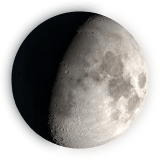
Understanding Today’s Lunar Display
Today, 5th December 2025, marks a special celestial moment as the moon phase is full. Following the Full Moon on Thursday, 4th December, observers worldwide continue to witness the brilliance of December’s Cold Moon illuminating the night sky. This astronomical event represents the moon at its most luminous state, when Earth positions itself between the sun and moon.
The Significance of Moon Phase Tracking
Monitoring moon phases has captivated humanity throughout history, serving purposes both practical and cultural. As the Moon orbits around Earth and Earth orbits around the Sun, the angle between the Sun, Moon, and Earth changes. As a result, the amount of sunlight that reflects off the Moon and travels to our eyes changes every day. The synodic cycle has a period of 29.5 days (new Moon to new Moon), creating the regular pattern of lunar phases that influences various aspects of life on Earth.
For astronomers and stargazers, understanding moon phases is essential for planning observations. Light from the Moon can be very bright which causes faint aurora to be barely visible, making moon phase information crucial for those seeking optimal viewing conditions for celestial phenomena.
Scientific Interest in Lunar Cycles
Beyond its aesthetic appeal, the moon’s influence on Earth extends to scientific inquiry. Human and animal physiology are subject to seasonal, lunar, and circadian rhythms. Although the seasonal and circadian rhythms have been fairly well described, little is known about the effects of the lunar cycle on the behavior and physiology of humans and animals. Recent research has explored potential connections between lunar cycles and various biological processes.
Studies examining sleep patterns have yielded intriguing results. Researchers discovered that around the full moon, people spent 30% less time in NREM sleep (deep sleep) and slept for 20 minutes less than when there wasn’t a full moon. People fall asleep later and sleep less on the nights leading up to a full moon, when moonlight fills the night sky after dusk. The findings suggest that human sleep is synchronized with the moon’s phases regardless of ethnic or cultural differences.
Cultural and Practical Applications
The Full Moon holds particular significance across cultures worldwide. December’s Full Moon, known as the Cold Moon, is evocative of winter’s chill. Throughout history, societies have used lunar calendars to mark time, plan agricultural activities, and celebrate cultural traditions. Today, moon phase information remains valuable for photographers seeking the perfect shot, fishermen planning expeditions, and anyone interested in connecting with natural cycles.
Looking Ahead
As we observe today’s full moon phase, it serves as a reminder of the intricate celestial mechanics governing our solar system. Whether you’re a seasoned astronomer or casual observer, the Full Moon offers an accessible opportunity to engage with the cosmos. With modern tools and resources, tracking moon phases has never been easier, allowing anyone to anticipate and appreciate these regular celestial events that have fascinated humanity for millennia.