

The Fascinating Gamma Ray Glow of the Milky Way Galaxy
Introduction
The Milky Way galaxy, our home in the universe, is an area of intense study for astronomers seeking to understand the complexities of cosmic phenomena. One of the most intriguing aspects of our galaxy is its gamma-ray glow. This high-energy radiation provides valuable insights into the processes occurring within the galaxy, from cosmic rays to dark matter interactions. Understanding this gamma-ray emission is crucial not only for astrophysics but also for comprehending the fundamental workings of the universe.
What is Gamma-Ray Glow?
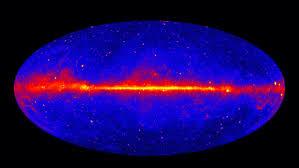
Gamma rays are electromagnetic radiation with the highest energy levels, far exceeding those of visible light. The glow emanating from the Milky Way is primarily caused by high-energy processes such as the annihilation of dark matter particles, the interactions of cosmic rays with interstellar gas and dust, and the phenomena surrounding black holes and neutron stars. Recent research has utilized data from various space telescopes, including NASA’s Fermi Gamma-ray Space Telescope, to map this gamma-ray emission in unprecedented detail.
Recent Discoveries
In a groundbreaking study published earlier this month, scientists announced that they have detected increased gamma-ray emission from the central region of the Milky Way. This finding could provide new insights into the distribution of dark matter, suggesting that certain areas may contain clumps of dark matter, which could lead to the formation of gamma-ray signals through particle interactions. Additionally, astronomers have observed that gamma-ray emissions appear to be higher in areas where cosmic rays are dense, suggesting a correlation between gamma-ray production and cosmic ray sources.
Significance of the Findings
These discoveries are significant for several reasons. Firstly, they enhance our understanding of the Milky Way’s structure and the types of matter that compose it. Secondly, they contribute to the larger narrative of understanding dark matter, a substance that constitutes approximately 27% of the universe yet remains elusive. As astronomers and physicists continue to probe the mysteries of gamma rays, the implications for theoretical models of cosmology and particle physics are profound.
Conclusion
The gamma-ray glow of the Milky Way galaxy is not just a spectacular cosmic feature; it is a vital resource for scientists seeking to unveil the secrets of the universe. As technology advances, and with ongoing missions and studies, it is expected that we will glean further insights into what this glow reveals about galaxies and their ecosystems. For readers and enthusiasts alike, following the developments in this field promises a thrilling glimpse into the mysteries of the cosmic frontier.