

New Year’s Day Superstitions: Global Traditions to Welcome 2026 with Good Fortune
Why New Year’s Day Superstitions Matter
As we bid farewell to 2025 and welcome 2026, millions of people worldwide turn to time-honoured superstitions and traditions believed to bring good fortune, prosperity, and love for the year ahead. New Year’s Eve has long been a moment for symbolism, with traditions around the world reflecting beliefs about luck, abundance, and renewal. These customs, some dating back thousands of years, offer us a sense of control and optimism as we step into the unknown future.
Food Superstitions for Prosperity and Luck
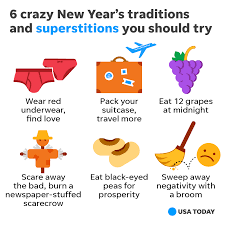
Food plays a central role in New Year’s superstitions across cultures. In Spain, the tradition involves eating 12 grapes at midnight—one for every month—to bring luck for the year ahead. Meanwhile, the Southern tradition of eating black-eyed peas and collard greens is said to bring wealth, with the greens representing dollars and the peas coins.
In Japan, it’s tradition to eat Toshikoshi soba noodles on New Year’s Eve, meaning ‘year-crossing noodle,’ said to help eaters cross into the new year whilst breaking free from the past. However, there are foods to avoid: chicken and lobster are considered unlucky—chicken because it has wings to make your luck fly away, and lobster because they walk backward.
Household and Cleaning Superstitions
What you do around the house on New Year’s Day can supposedly impact your fortune. According to Chinese superstition, cleaning your house on New Year’s Day washes away the good luck you’ve stored up for the new year. Conversely, it’s considered bad luck to start the new year with bare cupboards, signaling poverty and hardship.
An Irish superstition suggests that hitting bread on your doors and walls can fend off evil spirits and bad luck. More pleasantly, superstitions tell us to leave windows open so you can let the old year out and the new one in.
Money and Prosperity Rituals
Financial superstitions abound for those seeking prosperity in 2026. Fill your wallet with cash from the ATM, and don’t loan out any money on New Year’s Eve or New Year’s Day, or you could set a precedent for the months ahead. In Greece, many households hang onions on their front door as a symbol of growth and rebirth, with the vegetable known for its high fertility.
Travel and Romance Superstitions
For those with wanderlust, in Colombia, some walk around with an empty suitcase on New Year’s Eve, as it’s believed to ensure you’ll travel throughout the next 12 months. Romance seekers have their own rituals: red underwear is associated with romance, making it ideal for singles seeking love, whilst yellow is associated with wealth and prosperity.
The Scottish superstition of ‘first-footing’ holds that if a tall, dark-haired man bearing gifts is the first person to enter your home after midnight, you will have luck in the new year.
Significance for 2026 and Beyond
Whether or not these superstitions hold any real power, they serve an important psychological function: they give us hope, create meaningful rituals with loved ones, and provide a sense of intentionality as we enter a new year. These traditions make for fun things to do on New Year’s Eve, even if you’re not the superstitious type. As we welcome 2026, embracing these time-honoured customs connects us to centuries of human optimism and our universal desire for a better tomorrow. Whether you choose to eat 12 grapes, avoid the laundry, or carry an empty suitcase around the block, these traditions remind us that new beginnings are always worth celebrating.