

St Stephen’s Day 2025: A Celebration of Faith, Charity and Tradition
Understanding St Stephen’s Day: History and Significance
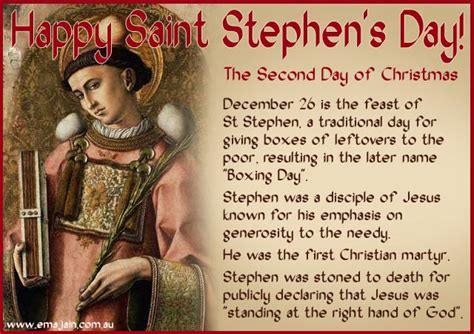
St. Stephen’s Day always falls on December 26, the day immediately following Christmas Day. In 2025, Saint Stephen’s Day falls on Friday 26 December. Saint Stephen’s Day is the second day of Christmastide and is celebrated in honour of one of the first Christian martyrs, Saint Stephen, who was stoned to death in 36 AD. The day is named after Saint Stephen, who is recognized in Christian theology as the first Christian martyr. According to the Acts of the Apostles, Stephen was a deacon in the early church who was known for his service to the poor and his powerful preaching.
St Stephen’s Day Celebrations Across the United Kingdom and Ireland
The date is also a public holiday in those countries that celebrate Boxing Day on the day in addition to or instead of Saint Stephen’s Day, such as Australia, Canada, New Zealand, South Africa and the United Kingdom. In the UK, the day is more commonly known as Boxing Day. In the Republic of Ireland, Saint Stephen’s Day (Irish: Lá Fhéile Stiofáin) is one of ten official public holidays.
Because it falls on a Friday this year, many businesses and government offices in countries that observe the holiday will be closed, creating a long holiday weekend for workers and families. Saint Stephen’s Day is a popular day for visiting family members and going to the theatre to see a pantomime.
Unique Irish Traditions: Wren Day and Festive Customs
Ireland has particularly distinctive St Stephen’s Day traditions. In the Isle of Man and in parts of Ireland, it is also known as Wren Day. It was traditional to hunt a wren, which would be paraded around the neighbourhood on top of a staff decorated with holly, ivy and ribbons. Today, the wren is no longer hunted, but Wren Day has survived or been revived in a few towns, where groups of Wrenboys hold small parades and carry around a stuffed or fake wren.
Another big event on this day in Ireland is horse racing at such places as the Leopardstown Racecourse on the southern edge of Dublin. Today, many Irish families also spend the day at the horse races or attending local sporting matches. It is a day for visiting family members you missed on Christmas Day and enjoying leftovers.
European Traditions and Regional Variations
Across Europe, St Stephen’s Day takes on different forms. In countries like Austria, Germany, Poland, and the Czech Republic, Stefanitag or Drugi Dzień Świąt (Second Day of Christmas) is a time for visiting extended family and friends. It is less about commercial shopping and more about continuing the peaceful celebration of Christmas.
Saint Stephen’s Day (Sant Esteve) on 26 December is a holiday in Catalonia. It is traditionally celebrated with a festive meal that includes canelons. The pasta tubes are stuffed with ground meat that may include the leftovers of the previous day’s escudella i carn d’olla, turkey, or capó. In some places, St Stephen’s feast day is traditionally a day for many Italians to visit the Nativity scenes at the churches. Other events on St Stephen’s Day in different parts of Italy include markets, carnivals and festivals.
The Significance for Modern Celebrations
St Stephen’s Day remains an important holiday that extends the Christmas season and emphasises values of charity, family, and community. Because of his dedication to serving those in need, he is often associated with acts of charity. This connection to charity is one reason why the day is linked to “boxing up” gifts for the poor in the UK tradition of Boxing Day.
Whether you’re enjoying leftover Christmas dinner, attending church services, or spending time with extended family, St Stephen’s Day 2025 offers a wonderful opportunity to continue the festive spirit and reflect on the values of generosity and compassion that Saint Stephen embodied. As this year’s celebration falls on a Friday, many will enjoy an extended holiday weekend, making it an ideal time to embrace both traditional customs and create new family memories.