

China Protests: A Growing Wave of Public Dissent Reflects Deepening Economic and Social Tensions
Introduction: The Significance of Rising Protests in China
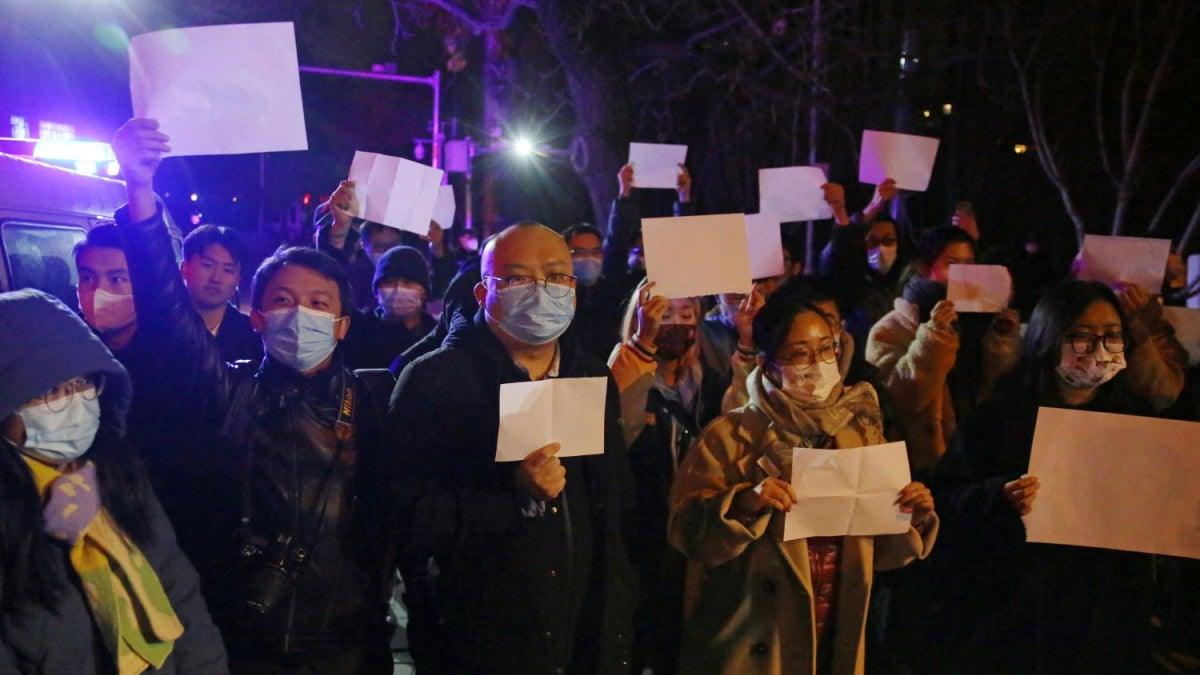
Despite the Chinese Communist Party’s relentless suppression of free expression, protests continue to occur regularly across China, signalling deep-seated public frustration with economic hardship, social injustice, and governmental policies. The importance of these demonstrations cannot be understated—they represent rare windows into the tensions between state authority and societal grievances in one of the world’s most tightly controlled political systems. Even as the Chinese Communist Party has relentlessly suppressed free expression, the China Dissent Monitor has revealed that protests take place regularly in every region of China.
Understanding these protest movements is crucial for policymakers, businesses, and citizens worldwide, as they reflect broader economic and political trends in the world’s second-largest economy. These acts of dissent expose vulnerabilities in China’s governance model and illuminate the human cost of policies that prioritise control over public welfare.
Main Body: The Nature and Drivers of China’s Protests
A Surge in Economic-Related Protests
Recent data reveals a striking escalation in protest activity driven primarily by economic grievances. Freedom House recorded 1,220 protests linked to the housing sector in the first half of 2025, double the number of events in the first half of 2023 or 2024. The real estate crisis, which has plagued China since 2021, continues to be a major catalyst for public unrest. There has been a particularly sharp rise in homeowners protesting against the unscrupulous practices of property management companies—such as sudden price increases or the use of a community’s shared spaces for side businesses.
Labour protests have also intensified significantly. The 1,219 labour protests documented in the first half of 2025 represent a 66 per cent increase compared with the same period in 2024. Workers facing unpaid wages, poor working conditions, and job insecurity have increasingly taken to the streets to demand better treatment.
Religious Crackdowns Spark Resistance
Beyond economic concerns, religious freedom has emerged as another flashpoint. Chinese authorities surrounded a church in Wenzhou last week with hundreds of armed and special forces police as well as bulldozers and other demolition material, part of the biggest crackdown against Christians in China since 2018. Police detained nine leaders of the underground Early Rain Covenant Church in Chengdu on 6 January, and nearly 30 from Zion Protestant Church in October, including its founder Pastor Ezra Jin.
Government Response and Suppression
The Chinese government’s response to protests has been characteristically forceful. In one notable incident in Jiangyou, Sichuan Province, residents protested over a school bullying case. Videos show a SWAT team charging into the crowd and violently beating protesters with batons around midnight. Such crackdowns highlight the regime’s zero-tolerance approach to public dissent.
Conclusion: Significance for Readers and Future Outlook
The surge in protests across China reflects profound systemic challenges that Beijing cannot easily suppress through force alone. The combination of a persistent housing crisis, declining economic growth, and increasing social grievances creates a combustible environment that could shape China’s political trajectory in the years ahead.
For international observers, these protests serve as important indicators of China’s internal stability and the sustainability of its current governance model. Marking its third year of research in June, China Dissent Monitor has documented more than 10,000 protest actions, ranging from rural residents protesting land development to nationwide demonstrations against the government’s zero-COVID-19 policy. This extensive documentation reveals that dissent is not isolated but systemic.
Looking forward, the trajectory of China’s economy—particularly the resolution of its housing crisis and the government’s ability to restore consumer confidence—will likely determine whether protest activity intensifies or subsides. What remains clear is that Chinese citizens, despite facing severe repercussions, continue to speak out when their fundamental rights and livelihoods are threatened. These brave acts of resistance remind the world that beneath the facade of authoritarian control, the desire for justice, dignity, and accountability persists.