

Global Economic Powerhouses: The Best Performing Economies of 2026
Understanding the World’s Best Economies in 2026
As we navigate through 2026, the global economic landscape continues to evolve, with the global economy projected to reach $123.6 trillion. Understanding which economies lead the pack has never been more critical for businesses, investors, and policymakers alike. The concept of the “best economy” encompasses not just size, but also growth rates, stability, and resilience in the face of global challenges.
The Undisputed Economic Leader
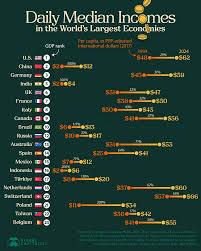
The U.S. will remain the world’s largest economy in 2026 with a projected GDP of $31.8 trillion, maintaining its century-long dominance. This is roughly the size of China (2nd), Germany (3rd), and India (4th) combined. Despite recent changes in trade policy, U.S. real GDP is projected to grow by 2.1% in 2026, demonstrating continued economic resilience.
The American economy’s strength lies in multiple factors. A somewhat resilient labor market and continued consumer spending underpin this dominance, while innovation across technology, aerospace, and life sciences sectors continues to drive growth.
Asia’s Rising Economic Power
Asia pips North America as the world’s largest economic region. With China, Japan, and India, the region has a slight advantage over the U.S. and Canada. China maintains its position as the world’s second-largest economy, though structural headwinds—from an aging population to a tepid property market—are cooling GDP growth to the 4% range.
India has emerged as a standout performer. India will still be the fastest growing major world economy with a GDP growth rate of 6.2% for 2026. India’s economy is projected to reach $4.5 trillion, making it the world’s fourth-largest economy by GDP, having overtaken Japan in 2025.
Economic Challenges and Global Outlook
The 2026 world economy has a cautious outlook, according to the October report put out by the International Monetary Fund (IMF). The organization says that global growth is slowing amid fragmentation and rising protectionism. Trade tensions, particularly concerning tariffs, continue to create uncertainty in global markets.
The top five economies generate more than 55% of global economic output, highlighting the concentration of economic power. Meanwhile, economic power is no longer concentrated in just a handful of places. Growth is spreading across new regions, new industries, and new supply-chain corridors.
What This Means for the Future
The economic rankings of 2026 reveal important patterns about the future of global commerce. While the United States maintains its position as the best economy by total output, emerging markets—particularly India—are gaining ground rapidly. For businesses and investors, understanding these shifts is crucial for strategic planning.
The importance of these economic rankings extends beyond mere numbers. They influence where companies build factories, where investment capital flows, and how governments shape trade policies. As we move forward, the balance between established economic powers and rapidly growing emerging markets will continue to reshape the global economic order, creating both challenges and opportunities for nations worldwide.