

Understanding Rachel Reeves’ Back Door Death Tax Proposal
Introduction
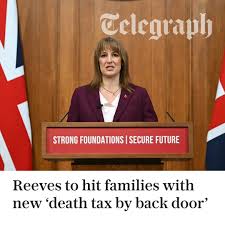
The concept of a ‘Back Door Death Tax’ has emerged as a point of contention in the UK political landscape, especially in light of Rachel Reeves’ recent proposals. As discussions around tax policies evolve, understanding the implications of such proposals is crucial for taxpayers and stakeholders alike. This tax specifically raises questions about fairness and the government’s approach to managing wealth distribution upon an individual’s death.
The Proposal Explained
Rachel Reeves, the Shadow Chancellor of the Exchequer, has drawn attention with her suggestion to reform inheritance tax laws. The term ‘Back Door Death Tax’ refers to a strategy aimed at widening the tax base connected to wealth transfers after death without straightforwardly increasing the official inheritance tax rate. Instead, it implies the introduction of additional taxes or revised taxation mechanisms that may not be immediately obvious as taxes on estates.
The goal of this proposal, according to Reeves, is to address growing disparities in wealth and ensure that public services have adequate funding, especially in a post-pandemic economy. By targeting substantial inheritances and the wealthy, Reeves implies that such measures could recalibrate the balance of economic support across various demographics in Britain.
Current Context and Reactions
Currently, the UK is facing significant economic challenges, including rising costs of living and an ongoing recovery from the COVID-19 pandemic. These pressures have intensified debates over fiscal policies and how to sustain social services amidst budgetary constraints. Responses to Reeves’ proposal have been mixed.
Supporters argue that a restructured approach to inheritance taxation could generate essential revenue while promoting fairness in wealth distribution. However, critics fear it may deter savings and inheritance, possibly leading to discontent among the middle class who may see their estates taxed unexpectedly. Conservative politicians have labelled it a ‘stealth tax’, suggesting it may hit families trying to pass down generational wealth.
Conclusion
As the Labour Party continues to navigate the complexities of economic policy reform, the idea of the Back Door Death Tax led by Rachel Reeves is set to keep the topic of inheritance tax in public and political discourse. Understanding the potential implications of such a tax is vital for all taxpayers, regardless of wealth level. With the economy in flux, it remains to be seen how viable these proposals will be and what adjustments may come from both the public and political arenas. This debate will likely evolve further as the next general election approaches, making it a significant topic for citizens concerned about their financial future.