

Chips on Beach: Thousands of Frozen Chip Bags Wash Ashore in Sussex After Storm Goretti
Unprecedented Beach Pollution Event Stuns Sussex Residents
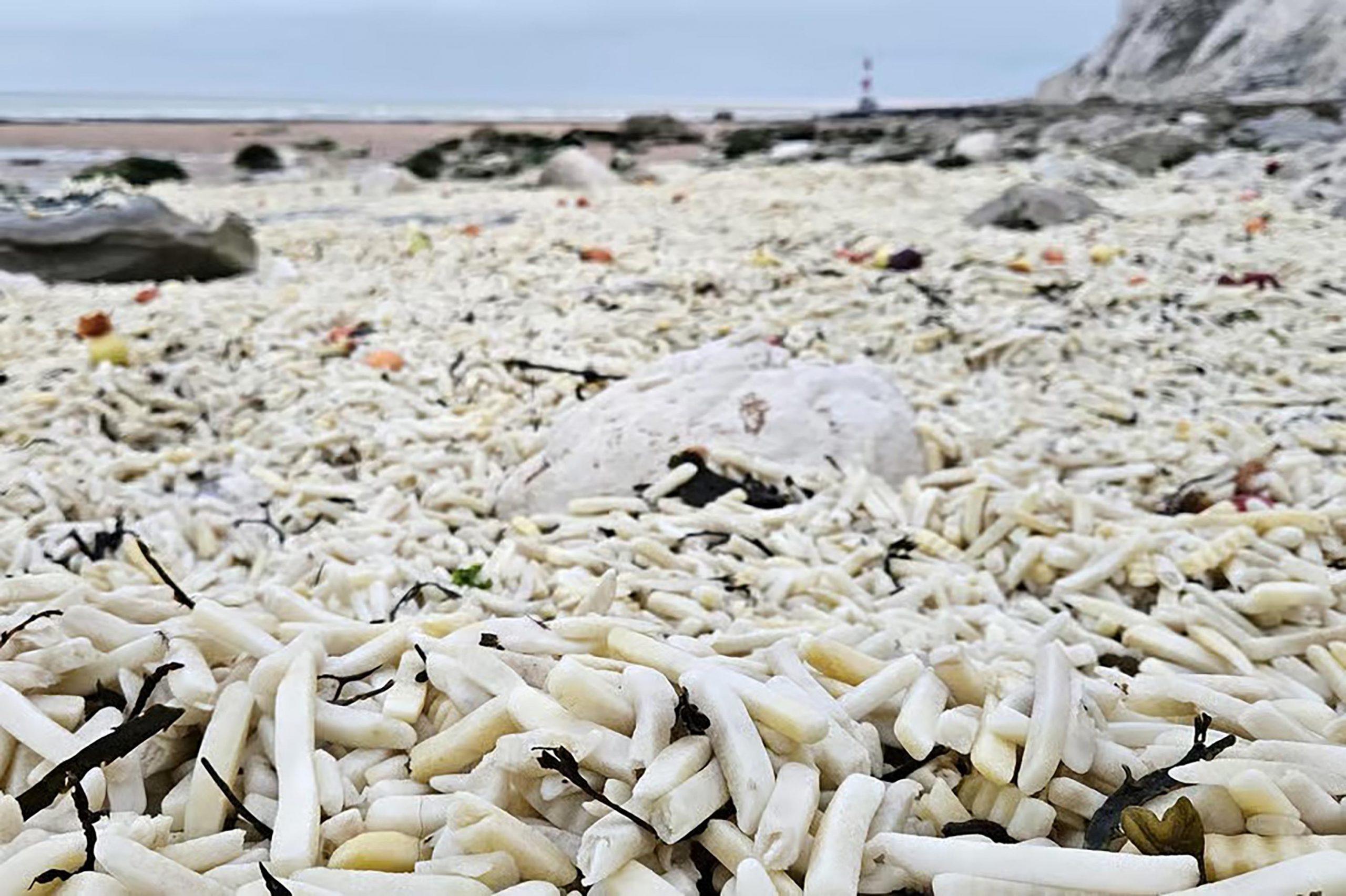
The discovery was made by local resident Joel Bonnici, who said Falling Sands near Eastbourne was made to “look like the Caribbean golden sands” by the potato flood. Thousands of bags of chips have washed up on a beach in Sussex. This bizarre incident highlights the growing concern about maritime cargo security and the environmental impact of shipping accidents along Britain’s coastline.
Storm Goretti Triggers Container Disaster
The cargo spillage originated from Storm Goretti, which battered the south coast earlier this month with winds exceeding 70 miles per hour. According to the Maritime and Coastguard Agency, 17 containers were lost from a single vessel off the Isle of Wight during the tempest. The incident left beaches across East and West Sussex littered with debris including not just frozen chips, but also onions, face masks, and other packaging materials.
“In some areas the chips were two-and-a-half feet deep into the ground,” Bonnici explained, describing the shocking scale of the pollution. The white plastic bags created an illusion of pristine Caribbean sand from a distance, but closer inspection revealed the true extent of the environmental disaster.
Community Response and Wildlife Concerns
Eastbourne Borough Council (EBC) said on Monday that the plastic had “largely been removed by volunteers”. Trisha Barros, who was helping to clear the bags, told BBC Radio Sussex when she saw the beach on Saturday it was “just a sea of chips, it was a bit insane”. The community rallied quickly, with volunteers responding to social media call-outs to help with the clean-up effort.
Mr Bonnici expressed particular alarm about the threat posed to the small seal colony which inhabits the waters nearby. Wildlife experts warn that both the plastic packaging and decomposing potatoes could seriously harm marine life. Trevor Weeks, founding director of East Sussex Wildlife Rescue and Ambulance Service, said the primary risk would be to the water quality due to the decomposition of the potatoes, explaining “This can lead to localised oxygen depletion which can affect fish, crustaceans, and other small organism, especially in sheltered areas or tidal pools.”
Looking Ahead: Preventing Future Incidents
This incident raises critical questions about cargo security standards in severe weather conditions. The Maritime and Coastguard Agency continues to monitor multiple container sites along the Sussex coast, working with vessel operators to recover remaining debris. For local residents and Britain’s coastal communities, this event serves as a stark reminder of how vulnerable our shores are to maritime accidents and the urgent need for stronger prevention measures to protect both beaches and wildlife from similar disasters in the future.