

Easter Island Faces Climate Crisis as New Research Rewrites Its History
Ancient Monuments Under Threat from Rising Seas
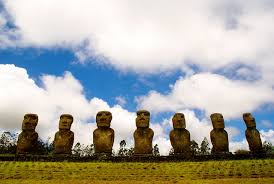
Easter Island, the remote Pacific territory renowned for its enigmatic moai statues, finds itself at a critical crossroads in 2025. Recent studies indicate that rising sea levels could push powerful seasonal waves into Easter Island’s 15 iconic moai statues, marking a profound threat to one of humanity’s most treasured archaeological sites. Rising sea levels could flood more than 50 archaeological sites on Easter Island by 2080, including the celebrated Ahu Tongariki platform.
The threat represents more than the loss of tourist attractions. Researchers from Easter Island built a high-resolution digital twin of the island’s eastern coastline and ran computer models to simulate future wave impacts under various sea level rise scenarios. These findings underscore the urgent need for protective measures, from coastal armoring to potentially relocating these monumental sculptures that have stood for centuries.
Revolutionary Archaeological Discoveries Challenge Old Narratives
Researchers have used 11,000 images to create a 3D model of Rano Raraku, the Easter Island quarry that served as the source of stone for the more than 1,000 moai. This groundbreaking digital reconstruction, published in December 2025, offers unprecedented insights into how the Rapa Nui people organized their society. Analysis of the new 3D model identified 30 separate centers of quarrying activity, with separate workshops that align to different clan groups working intensively in their specific areas.
Meanwhile, a new study led by researchers at the Lamont-Doherty Earth Observatory offers the clearest evidence yet that a centuries-long drought transformed life on Rapa Nui beginning around the year 1550. Their findings challenge long-held narratives of societal collapse, instead showing that Rapanui communities were resilient to profound climate stress. This research fundamentally questions the popular “ecocide” narrative that portrayed Easter Island as a cautionary tale of environmental destruction.
Cultural Significance and Modern Challenges
New Uppsala University research published in Antiquity provides evidence that Rapa Nui was not a passive recipient of cultural traditions, but an active participant in the molding of ritual architecture in East Polynesia. This revelation positions Easter Island not as an isolated society, but as a dynamic cultural hub that influenced architectural developments across Polynesia between 1300-1600 CE.
Today, tourism remains the backbone of Easter Island’s economy, yet it presents its own challenges. The figure is around 100,000 per year and increasing all the time, with tourism becoming the island’s main industry. This growth has sparked debates about sustainability, with local communities advocating for caps on visitor numbers to protect both the environment and cultural heritage.
Looking Forward: Preservation and Understanding
As Easter Island confronts both climate change and evolving historical understanding, the international community faces questions about how to preserve this World Heritage Site. The combination of advanced 3D modeling technology, climate modeling, and new archaeological methodologies offers hope for both documentation and protection. However, the clock is ticking: by 2080, many of these irreplaceable monuments could face irreversible damage from the encroaching Pacific.
For researchers, tourists, and the Rapa Nui people themselves, Easter Island represents far more than mysterious stone heads. It embodies human resilience, cultural innovation, and the urgent need to protect our shared heritage from the mounting challenges of the 21st century.