

FPL Price Changes: Key Player Movements Reshape Fantasy Premier League Strategy
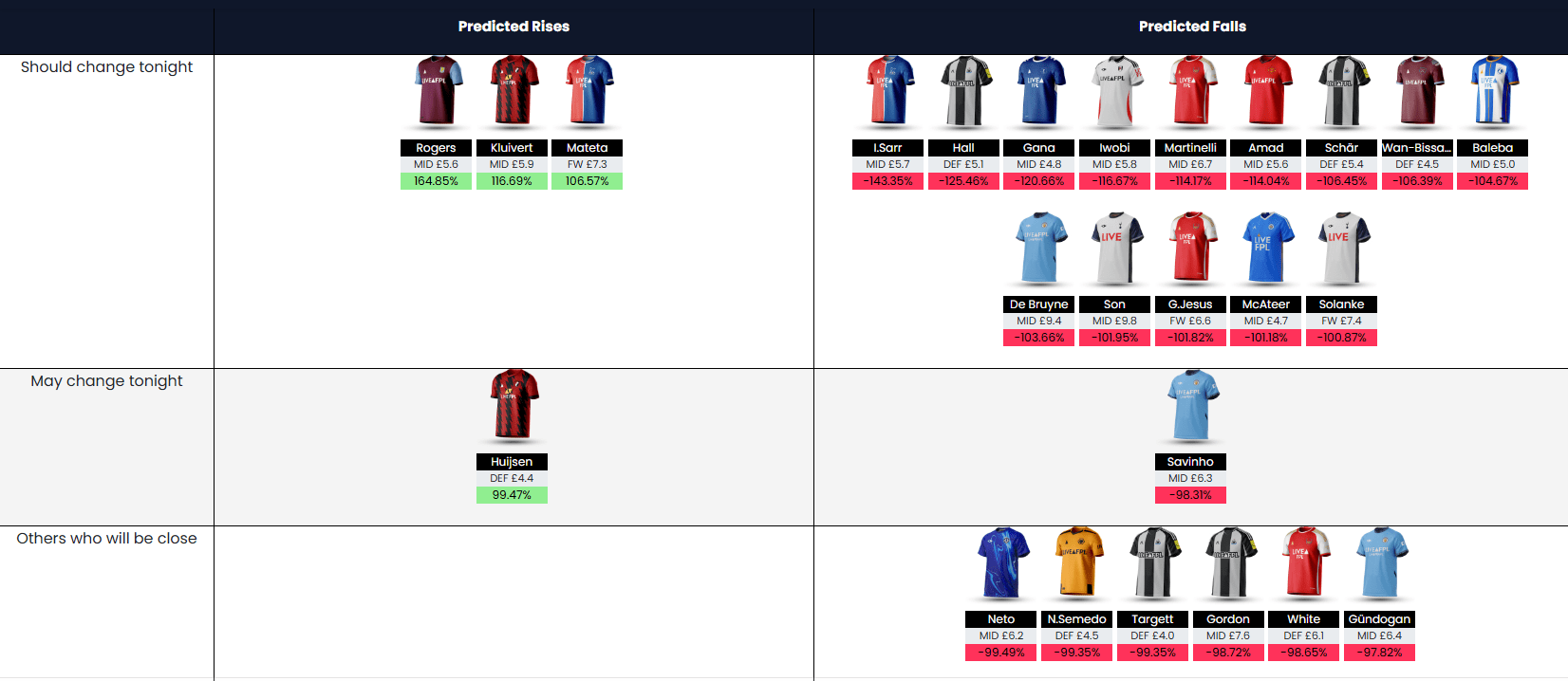
Understanding FPL Price Changes and Their Impact
Fantasy Premier League (FPL) price changes have become a critical factor for managers seeking to maximise their team value and overall performance. Price changes in FPL occur daily at 01:30 GMT, creating a dynamic market that rewards strategic planning and timely decision-making. With the festive period approaching, understanding these price movements has never been more important for maintaining competitive advantage in mini-leagues.
Recent Major Price Movements
December has witnessed significant shifts in player valuations. Erling Haaland has reached £15.0m, solidifying his position as the highest-valued player, whilst maintaining an impressive 72.5% ownership. Meanwhile, Phil Foden has experienced multiple rises to £8.3m, reflecting his recent excellent form. Other notable risers include Daniel Muñoz at £6.1m and Bruno Guimarães at £6.8m.
On the falling side, Antoine Semenyo has dropped to £7.7m despite maintaining 50% ownership, highlighting concerns about Bournemouth’s attacking output. Micky van de Ven has fallen to £4.7m, whilst Hugo Ekitiké dropped to £8.4m due to limited game time at Liverpool.
How FPL Price Changes Work
FPL price changes are caused by the number of transfers in/out for players, with prices rising by £0.1 when net transfers exceed a positive fixed threshold. Price falls require net transfers to be below a certain percentage of the player’s ownership. Importantly, Wildcard and Freehit transfers don’t count towards price changes, adding complexity to predictions.
Strategic Implications for Managers
For FPL managers, monitoring price changes offers dual benefits: protecting team value and identifying trending players before their prices rise. Various prediction tools utilise machine learning algorithms to forecast changes, though even the most accurate predictors achieve approximately 60-70% accuracy. With 14 players experiencing price adjustments recently, managers must balance immediate performance needs with long-term value preservation as the crucial festive fixture period approaches.