

Eyes Wide Shut: Kubrick’s Final Film and Its Enduring Mysteries
Introduction: Why Eyes Wide Shut still matters
Eyes Wide Shut is a 1999 erotic psychological drama directed, produced and co‑written by Stanley Kubrick. Starring Tom Cruise and Nicole Kidman, the film has continued to attract attention for its provocative themes, striking imagery and the aura of mystery that surrounds Kubrick’s final feature. The film’s exploration of jealousy, desire and the boundaries between reality and illusion keeps it relevant for audiences and critics alike.
Main body: Production, themes and reception
Origins and production
Kubrick developed Eyes Wide Shut after reading the work of Austrian writer Arthur Schnitzler and while looking for a project to follow his earlier monumental film, 2001: A Space Odyssey. Kubrick directed, produced and co‑wrote the screenplay, assembling a small principal cast led by Tom Cruise and Nicole Kidman. The film is widely discussed as Kubrick’s final film.
Plot focus and critical image
Contemporary summaries describe the story as an imaginative night‑journey taken by a man reeling from his wife’s teasing confession of fantasised infidelity. Other synopses note that a married doctor becomes caught between reality and illusion as he penetrates a masked secret society, where jealousy and obsession draw him into peril. Those elements underpin much of the film’s tension and the controversy that has followed it.
Music, symbolism and interpretation
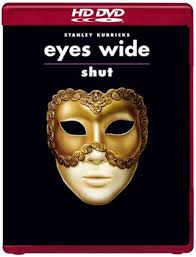
Jocelyn Pook wrote the original music for Eyes Wide Shut, although, as with several of Kubrick’s films, it is also noted for its use of classical music. Scholars and commentators have highlighted symbolic motifs in the film: for example, Carolin Ruwe argues that the mask functions as the film’s prime symbol, encapsulating themes of anonymity, ritual and concealed desire.
Enduring reputation
Years after its release the film remains described as notorious and shrouded in mystery. Critical and popular efforts to unpack its meaning have produced essays, books and pieces aiming to debunk myths or to place the film within Kubrick’s wider body of work.
Conclusion: Significance and takeaways for viewers
Eyes Wide Shut endures because it resists simple interpretation. Its combination of intimate drama, ritualistic spectacle, a distinctive soundtrack and rich symbolism invites repeated viewings and debate. For readers and viewers, the film offers a study of how cinematic form can probe private obsessions and public ritual, ensuring its place in discussions of late‑twentieth‑century cinema.