

Netflix’s The Great Flood: A Korean Disaster Thriller That Questions Humanity’s Future
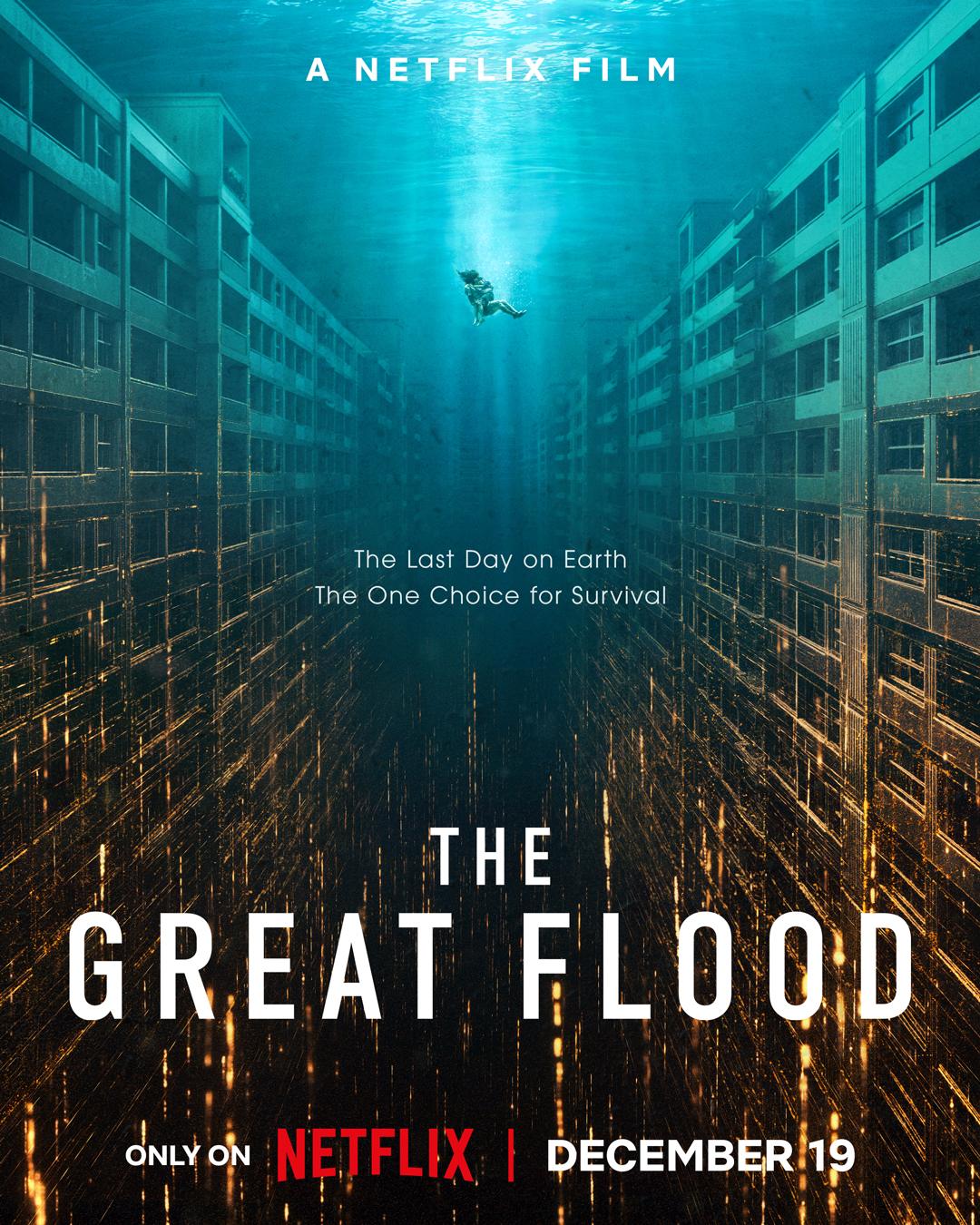
A New Disaster Film Arrives on Netflix
The Great Flood became available for global streaming on Netflix on December 19, 2025, introducing audiences to a gripping Korean sci-fi disaster thriller. Directed by award-winner Kim Byung-woo (The Terror Live), the South Korean disaster thriller stars Kim Da-mi (Itaewon Class) and Park Hae-soo (Squid Game). The film has garnered significant attention for its blend of disaster spectacle and thought-provoking themes about humanity’s survival.
Plot and Premise
When a raging flood traps a researcher and her young son, a call to a crucial mission puts their escape — and the future of humanity — on the line. The world begins to flood after a comet collapses into Australia, causing water levels to rise everywhere. The protagonist, An-na, an artificial intelligence researcher, must navigate the catastrophic situation while protecting her young son, Ja-in.
When she’s rescued by the mysterious Hee-jo, the two set off to find her son, but An-na soon realizes Hee-jo’s motives for offering help may not be as altruistic as they seem. What starts as a straightforward disaster film evolves into a complex narrative involving time loops, emotional intelligence experiments, and questions about the future of mankind.
Production and Reception
Filming started on July 1, 2022, and ended on January 5, 2023, with the world premiere on September 18, 2025 at the 30th Busan International Film Festival. While the film has been praised for its visual effects and strong performances, reviews have been mixed. The narrative becomes overly long, unnecessarily complicated, and increasingly confusing, with subplots piling up without clear direction.
Why It Matters
The Great Flood represents Netflix’s continued investment in Korean cinema and the disaster thriller genre. Despite its narrative complexity, the film raises important questions about artificial intelligence, motherhood, sacrifice, and humanity in crisis. For viewers interested in visually striking disaster films with deeper thematic elements, this Korean production offers an ambitious, if imperfect, cinematic experience that pushes beyond typical genre boundaries.