

S&P 500 Faces Turbulence Amid Tariff Threats and Rising Volatility in Early 2026
Introduction: Why the S&P 500 Matters Now
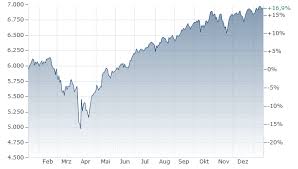
The S&P 500, America’s benchmark stock market index representing 500 of the largest publicly traded companies, has entered 2026 on a turbulent note following three consecutive years of double-digit gains. The broad market index is now off 0.7%, while the tech-heavy Nasdaq is down 1.2% in the period, marking a significant shift from the optimistic start to the year. Understanding the S&P 500’s movements is crucial for investors, as it serves as a barometer for the overall health of the US economy and affects millions of retirement accounts and investment portfolios.
Recent Market Developments
The S&P 500 experienced its worst day since October on January 19, 2026, when renewed tensions drove the S&P 500 down 2.1%, erasing its 2026 gain. The sell-off was triggered by President Trump’s announcement of escalating tariffs on NATO members over Greenland, with tariffs starting at 10% on Feb. 1 and rising to 25% on June 1. The Cboe Volatility Index (VIX) — Wall Street’s “fear gauge” — spiked to a high of 20.99, indicating heightened investor anxiety.
Small-Cap Outperformance
Despite the broader market weakness, small-cap stocks have shown remarkable resilience. The Russell 2000 is set to post a better daily performance than the S&P 500 for the 12th day in a row, its longest streak since the small-cap index 13 day overperformance in June 2008. Hopes for more rate cuts from the Federal Reserve and data indicating strong U.S. economic growth has driven small caps higher this year.
Analyst Outlook and Forecasts
Wall Street analysts maintain varied but generally optimistic views for 2026. Ed Yardeni, president of Yardeni Research, expects the S&P 500 to rise to 7,700 at year-end 2026, suggesting a gain of almost 12.5%. Meanwhile, analysts at Bank of America expect the benchmark index to hit 7,100 by year-end 2026, suggesting a roughly 3.72% gain from now, while analysts at Deutsche Bank expect the S&P to hit 8,000 points by year-end, suggesting a gain of 16.87%.
Conclusion: What This Means for Investors
The S&P 500’s early 2026 turbulence underscores the challenges facing investors after three exceptional years of gains. While the recent tariff-driven sell-off has introduced uncertainty, the index’s long-term fundamentals remain supported by corporate earnings and potential Federal Reserve rate cuts. However, uncertainty about Trump’s pick for Federal Reserve Chair as well as persistent geopolitical tensions and tariffs could create headwinds for stocks. Investors should remain vigilant, diversify their portfolios, and focus on long-term strategies rather than reacting to short-term volatility. The coming months will be critical in determining whether the S&P 500 can recover its momentum or faces a more prolonged period of consolidation.