

The Legacy of Ruud Gullit in Dutch Football
Introduction
Ruud Gullit is widely recognized as one of the most charismatic and talented figures in the history of football. Born on September 1, 1962, in Amsterdam, Netherlands, Gullit rose to fame not only for his extraordinary skills on the pitch but also for his influence off it. As a central figure in the ‘Clockwork Orange’ team of the 1980s and 1990s, Gullit’s contributions to Dutch football are of great importance, as he helped shape the modern game both in his homeland and abroad.
Career Highlights
Gullit’s professional debut came at HFC Haarlem in 1979, but it was his subsequent move to PSV Eindhoven that marked the beginning of his ascent in the footballing world. During his time at PSV, Gullit helped the team secure the Eredivisie title in 1986. However, it was his transfer to AC Milan in 1987 that solidified his status as a footballing powerhouse. Under the management of Arrigo Sacchi, Gullit formed a formidable partnership with stars like Marco van Basten and Franco Baresi.
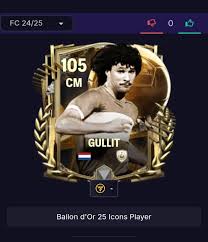
With AC Milan, Gullit won multiple Serie A titles and was pivotal in their success in European competitions, including the prestigious Champions League. His versatility as a player—able to operate as a forward or midfielder—allowed him to affect the game significantly. Gullit also earned individual accolades, notably winning the Ballon d’Or in 1987.
Impact on Dutch Football
Gullit’s role in the Dutch national team cannot be overstated. He was a key player in the Netherlands’ triumph at the UEFA European Championship in 1988, where his performance was instrumental in the team’s success. The tournament showcased Gullit’s ability to inspire not only through skill but also leadership, as he captained the national team during his later years.
Post-retirement, Gullit transitioned into coaching, taking on roles at clubs such as Chelsea and LA Galaxy while also working with the Dutch national team. His unique perspective as a former player brought innovative tactics and approaches to management, influencing the next generation of footballers.
Conclusion
Ruud Gullit’s legacy as a footballer endures to this day. His contributions to both club and country established him as an icon of Dutch football. As the sport continues to evolve, the principles he demonstrated—talent, versatility, and leadership—remain relevant for aspiring players. Upcoming talents in the sport often look back to figures like Gullit for inspiration, a testament to his everlasting influence in football.