

World Cup Groups 2026: Historic Draw Confirms 12 Groups for Expanded Tournament
Introduction: A New Era for the World Cup
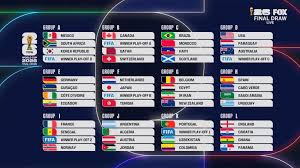
The anticipation has finally ended as the 2026 World Cup draw has taken place with the 12 groups confirmed for the tournament next summer. This historic event marks a watershed moment in football history, as the tournament has never been this big before — with 48 teams taking part, up from the 32 that participated at the last World Cup in Qatar in 2022. The draw, held at the Kennedy Center in Washington, D.C., has set the stage for what promises to be the most expansive and exciting World Cup ever hosted.
For football fans worldwide, understanding the group stage composition is crucial, as it determines not only the opening matches but also the potential path teams must navigate to reach the final. With three host nations and unprecedented expansion, the 2026 tournament presents unique challenges and opportunities for all participating nations.
The Draw Results: 12 Groups Defined
The draw determined which teams will make up the 12 groups of four that mark the opening stage — or the group stage — of the World Cup. Among the standout matchups, Brazil against Morocco and France against Norway are two of the standout games during the group stage, while Argentina, England, Spain and Germany will all be fairly happy with their draws.
The host nations received favourable draws. The U.S. Men’s National Team was drawn into Group D along with Paraguay, Australia and the winner of UEFA Playoff C — either Kosovo, Romania, Slovakia or Türkiye. Meanwhile, Canada will play Qatar, Switzerland and another yet-to-be-determined European team in the round-robin stage. The tournament will officially kick off June 11 in Mexico City with Mexico playing South Africa in a Group A match.
Tournament Structure and Format
Next summer’s event will be the first ever 48-team World Cup, with those nations being broken up into 12 groups of four. From there, 104 matches will be played at 16 venues across the U.S., Canada and Mexico to determine a World Cup champion. This expanded format provides more nations with the opportunity to compete on football’s grandest stage.
The competition will benefit smaller nations, as the eight-best third-placed teams will advance, offering additional pathways to the knockout rounds. The 2026 FIFA World Cup is from June 11 to July 19, 2026, providing over a month of world-class football action.
Conclusion: Historic Tournament Awaits
The 2026 World Cup groups reveal a tournament brimming with compelling narratives and competitive balance. With the draw complete, attention now turns to the playoff matches in March 2026, which will determine the final six qualifying spots. The expanded format promises more drama, upsets, and memorable moments than ever before.
For fans and participating nations alike, the significance of this World Cup cannot be overstated. It represents not just the largest tournament in history but also a celebration of football across North America. As teams prepare for their group stage battles next summer, the world eagerly awaits what could be the most memorable World Cup in the competition’s storied history.