

Buncefield Explosion: Two Decades of Safety Transformation
Introduction: A Pivotal Moment in Industrial Safety
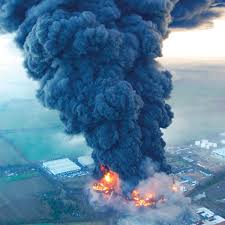
The Buncefield explosion remains one of the most significant industrial accidents in British history. On 11 December 2025, regulators marked the 20th anniversary of the catastrophic fire, reflecting on the ‘profound changes’ it has had on the major hazards sector’s management of risk. In the early hours of Sunday 11 December 2005, a major fire started after a storage tank at the depot overfilled, releasing a massive petrol vapour cloud that spread beyond the site perimeter and ignited. This disaster serves as a crucial reminder of the importance of robust safety systems and proactive regulation in protecting communities and the environment.
The Disaster and Its Impact
Buncefield was an oil storage facility in Hemel Hempstead, Hertfordshire, located near the M1 motorway. One of the initial explosions registered 2.4 on the Richter scale, sparking a huge fire that engulfed most of the site. Although mercifully no lives were lost, it forced thousands of residents and businesses to evacuate, with more than 2,000 homes and 600 businesses affected. Fires burned for five days, destroying much of the depot, damaging nearby businesses and properties, and injuring more than 40 people.
The disaster started when Tank 912 overfilled because its critical safety equipment didn’t work – the tank’s automatic gauge and independent high-level switch failed, and the valves that should have stopped the overflow didn’t operate. These failures led to the creation of a vapor cloud that ignited, resulting in a blast equivalent to the force of 30 tonnes of TNT.
Lasting Legacy and Regulatory Transformation
Regulators collaborated with HSE, trade associations, professional institutions and standards bodies to publish Safety and Environmental Standards for Fuel Storage Sites, which set out the learning from the incident and helped raise expectations across the fuel storage sector. In the past 13 years, there has not been a single accident from a COMAH site with serious off-site environmental impacts, demonstrating the effectiveness of these reforms.
Sarah Albon, HSE’s Chief Executive, noted that the comprehensive investigations, reforms to safety standards, and strengthened collaboration between regulators and industry have created a legacy that continues to protect people and places today. The explosion was described as a pivotal moment for industrial safety and environmental protection, leading to new fuel storage standards published in 2011.
Conclusion: A Continuing Influence on Safety Culture
The Buncefield explosion fundamentally changed how the UK manages major hazards in the fuel storage sector and beyond. Even 20 years later, remediation work at Buncefield is on-going, serving as a lasting reminder of what can happen when safety systems fail. The incident’s legacy lies not just in improved technical standards, but in fostering a more mature, collaborative relationship between industry and regulators. As we face new challenges from ageing infrastructure and climate change, the lessons from Buncefield remain as relevant as ever in safeguarding communities and the environment.