

Ultra-Processed Foods Under Fire as Governments Take Action on Public Health Crisis
Introduction: A Growing Health Concern
Ultra-processed foods have emerged as one of the most pressing public health challenges of our time. Americans get more than half of their total calories from ultra-processed foods, according to the Centers for Disease Control and Prevention. As new research continues to reveal alarming links between these convenience products and serious health conditions, governments are finally taking decisive action. The Trump administration is taking aim at ultra-processed foods while reversing long-held U.S. government stances on red meat and saturated fats, marking a significant shift in federal dietary policy.
What Are Ultra-Processed Foods?
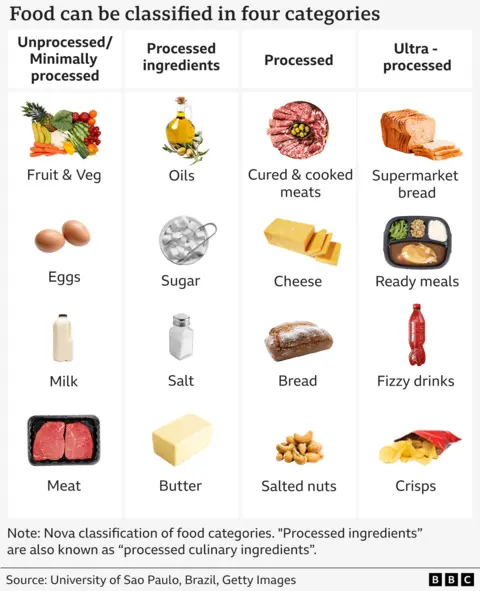
The most widely used definition is drawn from the Nova classification system developed by Brazilian epidemiologist Carlos Monteiro, which says that ultra-processed foods use industrial manufacturing to break down whole foods and contain cosmetic additives, like flavoring agents and emulsifiers, to increase their palatability. These products include packaged snacks, sugary drinks, frozen pizzas, sweetened cereals, and instant meals that dominate supermarket shelves and restaurant menus.
Mounting Scientific Evidence
The health implications are sobering. A 2024 review of 45 metanalyses, covering nearly 10 million study participants, found “convincing” evidence that a diet high in ultra-processed foods increases the risk of death from cardiovascular disease by 50% and the risk of anxiety by 48%. Direct associations were found between exposure to ultra-processed foods and 32 (71%) health parameters spanning mortality, cancer, and mental, respiratory, cardiovascular, gastrointestinal, and metabolic health outcomes.
Researchers at the Friedman School of Nutrition Science and Policy found that for every 10% increase in calories from ultra-processed foods, mortality risk rose by 9%. The evidence extends beyond weight gain to encompass metabolic syndrome, Type 2 diabetes, depression, and various forms of cancer.
Policy Action and Definition Debates
As the Trump administration looks to create a federal definition of ultra-processed foods, the question of the best way to differentiate products within a category that can lump packaged whole-wheat bread together with soda and cheese puffs has been the subject of much debate. The Food and Drug Administration (FDA) committed to research ultra-processed foods (UPFs), and establish a uniform definition with the Department of Agriculture (USDA) to “develop consistent policies and programs focused on UPFs”.
The new dietary guidelines have drawn mixed reactions. The new recommendations drew mixed reactions from experts, who criticized the emphasis on meat and dairy while praising limits on ultraprocessed foods and added sugars. Public health advocates argue that without clear definitions and systemic support, consumers face significant barriers to making healthier choices.
Conclusion: The Path Forward
The movement against ultra-processed foods represents what experts call a “pivotal moment” for action on ultra-processed foods, along the lines of the Tobacco Control Act. Scientists say only bold, coordinated policy action can counter corporate influence and shift food systems toward healthier options. For consumers, the message is clear: reducing ultra-processed food consumption, reading ingredient labels carefully, and prioritising fresh, whole foods can have measurable health benefits. As research continues and policies evolve, the battle over ultra-processed foods will likely shape public health outcomes for generations to come.