

Finland Seizes Ship After Critical Undersea Cable Damaged in Gulf of Finland
Cable Damage Sparks Major Investigation
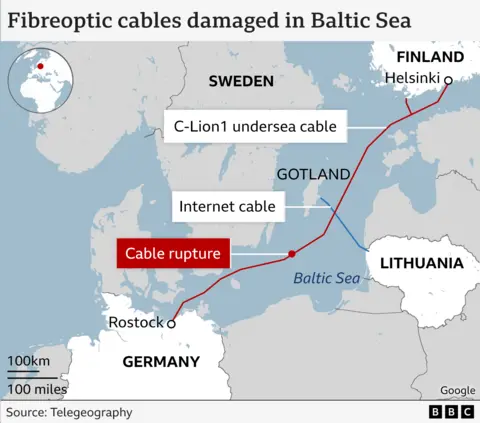
Finnish authorities have seized a vessel suspected of intentionally severing undersea telecommunications cables amid fears of Russian sabotage in the Gulf of Finland. The seized cargo vessel Fitburg was en route from the Russian port of St Petersburg to Israel at the time of the incident on Wednesday, marking another critical infrastructure incident in the strategically important Baltic region.
Significance for Regional Security
The latest incident underscores growing security concerns in Northern Europe, particularly regarding the vulnerability of critical undersea infrastructure. The undersea cable belongs to telecommunications service provider Elisa and is considered to be critical underwater infrastructure for Finland. All 14 members of the ship’s crew have been detained, adding that the crew are citizens of Russia, Georgia, Kazakhstan and Azerbaijan.
Helsinki police opened an investigation into potential aggravated criminal damage and aggravated interference with telecommunications. A second telecoms cable connecting the country to Finland, operated by Swedish company Arelion, was also damaged on Wednesday. This dual incident has raised additional alarm among regional authorities and heightened cooperation between Finland and Estonia.
Pattern of Cable Incidents
The area has been hit by a string of similar incidents in recent years. Most notably, on Christmas Day 2024, the Cook Islands-registered oil tanker Eagle S cut five cables in the Gulf of Finland after dragging its anchor on the seabed for 90km. Since Russia’s full-scale invasion of Ukraine in February 2022, many security analysts and political leaders have viewed cable sabotage as part of a “hybrid war” carried out by Russia against NATO countries and their allies.
Regional Response and Protection Measures
Incidents like this have become more frequent in recent years, raising suspicions they are the result of sabotage and prompting NATO to launch a project earlier this year specifically aimed at strengthening the protection of critical undersea infrastructure. The seizure demonstrates Finland’s increasingly proactive approach to protecting its critical infrastructure.
Importantly, the cable damage has “not affected the functionality of Elisa’s services in any way”, noting services have been rerouted. However, the psychological and strategic implications remain significant as European nations grapple with mounting threats to their undersea communications networks that are vital for both civilian and security purposes.