

A Woman of Substance: Meaning, Culture and Legacy
Introduction: Why ‘a woman of substance’ matters
The phrase “a woman of substance” evokes respect, resilience and influence. It is used to describe women recognised for character, achievement and moral strength rather than superficial traits. In contemporary discussions about leadership, gender equality and cultural representation the expression remains relevant because it frames success in terms of substance — values, persistence and tangible contribution. Understanding the phrase and its cultural footprint helps readers appreciate how language shapes perceptions of women in public and private life.
Main body: Origins, cultural reach and contemporary use
Origin and literary impact
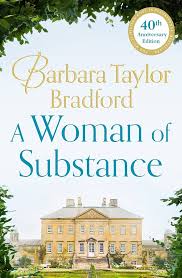
“A Woman of Substance” is widely associated with the bestselling novel by Barbara Taylor Bradford, first published in 1979. The book tells the story of Emma Harte, a woman who builds a business empire from modest beginnings through determination and shrewd decision-making. Its commercial success and dramatic narrative helped cement the phrase in popular culture as shorthand for a woman who combines ambition with integrity. The novel attracted a broad readership and was adapted for television in the 1980s, which broadened its audience and reinforced the expression’s resonance.
Phrase in public life and discourse
Beyond literature, calling someone “a woman of substance” is a concise way to honour accomplishments that matter long term — leadership, philanthropy, intellectual contribution or community impact. It appears in journalistic profiles, tributes and speeches where the speaker wants to emphasise depth over display. In business and civic contexts, the phrase can signal respect for women who have shaped institutions or advanced causes, while in everyday conversation it can celebrate quiet resilience and principled action.
Critiques and nuance
As with any label, the term is not neutral: it reflects particular values and can vary by culture and era. Some commentators point out that what counts as “substance” is contested and may reflect social privilege. Others argue that the phrase remains useful as a way to centre character and long-term contribution amid an image-focused media environment.
Conclusion: Significance for readers
“A woman of substance” continues to be a powerful, if sometimes debated, compliment. It encourages a focus on durability, ethical leadership and tangible achievement. For readers, recognising the phrase’s literary roots and its broader social use helps to assess how language honours — or limits — the ways we describe women’s lives. As public conversation about gender and leadership evolves, the phrase is likely to endure as a shorthand for respect, even as its meaning is continually reassessed.