Introduction: Why the SS Richard Montgomery Still Matters
The SS Richard Montgomery is a Second World War Liberty ship that sank off the Kent coast in August 1944 while carrying a cargo of munitions. Its presence in the Thames Estuary continues to be relevant because the wreck still contains a significant quantity of unexploded ordnance. The potential risk to shipping, local communities and the marine environment keeps the wreck under close watch by UK authorities.
Main body: Facts, events and current status
How the wreck came to be
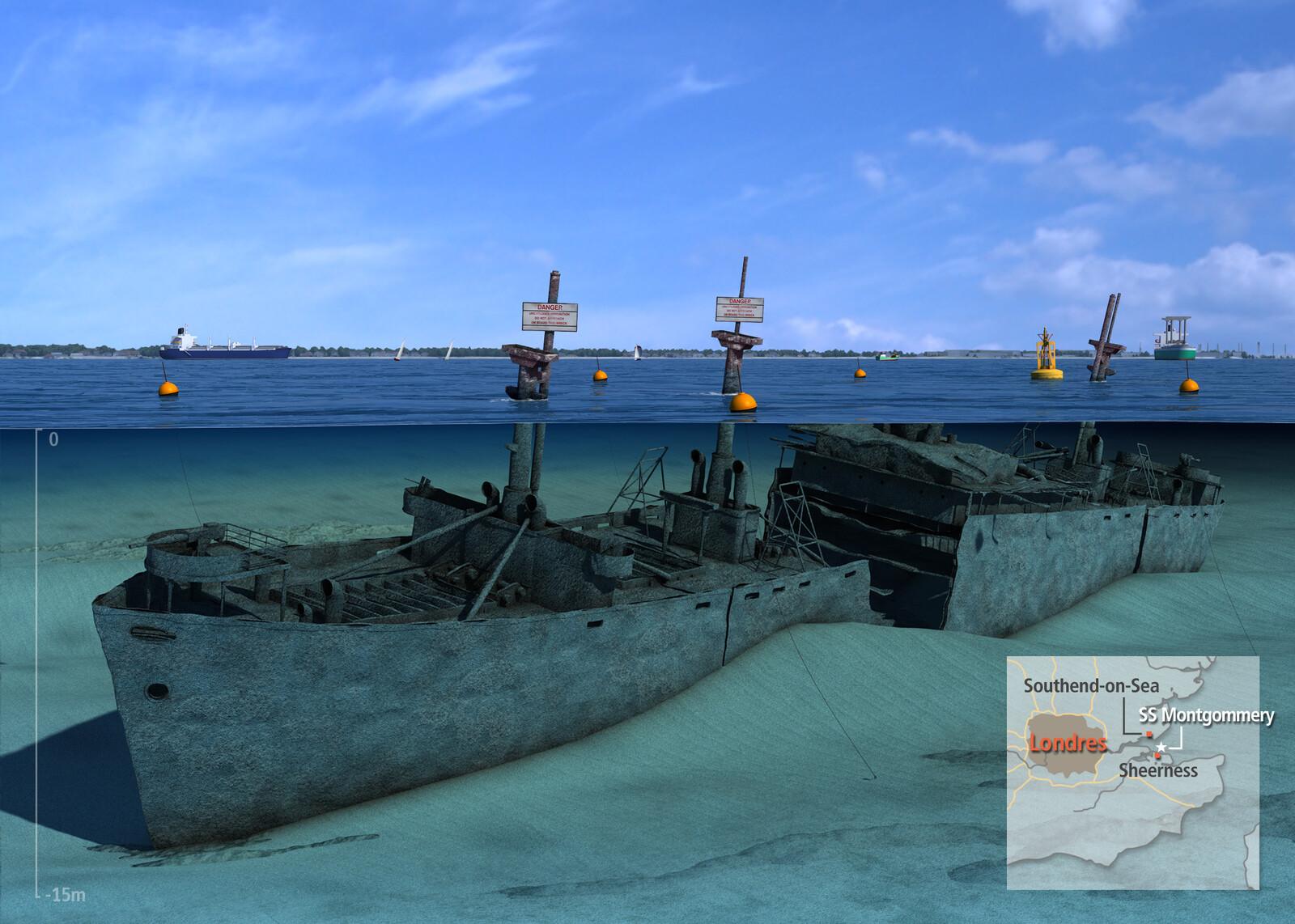
The ship grounded and broke apart in the Nore Anchorage near the Isle of Sheppey in August 1944. Attempts at salvage after the war removed some material, but a large proportion of the cargo—reported at around 1,400 tonnes of munitions—remains within the broken hull. Over time the wreck has degraded but substantial explosive material is believed to persist in the debris.
Monitoring and safety measures
UK authorities including the Maritime and Coastguard Agency and other government bodies maintain regular monitoring of the site. The location is marked on maritime charts and subject to navigational warnings; physical markers and patrols help enforce exclusion zones around the wreck. Experts assess structural deterioration and corrosion periodically to inform risk management decisions.
Risks and assessments
Assessments carried out over decades have repeatedly warned that the explosives could, in principle, detonate if disturbed, but also indicate that an uncontrolled explosion is unlikely under current conditions. The main concerns are localised damage to vessels or infrastructure and environmental contamination should the ordnance be upset. Because of the complexity and hazard, large-scale salvage or removal has been judged technically challenging and risky.
Conclusion: Outlook and significance for readers
The SS Richard Montgomery will remain an unresolved legacy of wartime logistics for the foreseeable future. For residents, sailors and policymakers the priority is continued monitoring, clear navigation warnings and contingency planning. While the immediate risk to shore communities is assessed as low, the wreck underlines the long-term consequences of wartime wrecks in busy coastal waters and the need for ongoing vigilance and investment in monitoring and emergency preparedness.