

The Guardian: 200 Years of Fearless, Independent Journalism
A Legacy of Independence and Trust
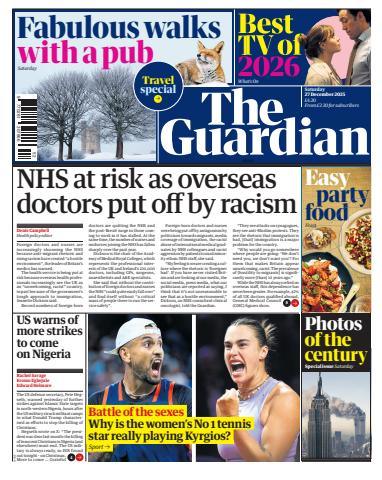
The Guardian is a British daily newspaper founded in Manchester in 1821 as The Manchester Guardian, changing its name in 1959. With over two centuries of reporting, The Guardian has established itself as one of the UK’s most influential news organisations. It is considered a newspaper of record in the UK, built on principles of editorial independence and liberal values.
Along with its sister paper, The Guardian Weekly, The Guardian is part of the Guardian Media Group, owned by the Scott Trust Limited. The trust was created in 1936 to secure the financial and editorial independence of The Guardian in perpetuity and to safeguard the journalistic freedom and liberal values of The Guardian free from commercial or political interference. Unlike many media organisations, profits are reinvested in its journalism rather than distributed to owners or shareholders.
Award-Winning Investigative Journalism
The Guardian has broken some of the most significant news stories of recent decades. In June 2013, The Guardian broke news of the secret collection by the Obama administration of Verizon telephone records, and subsequently revealed the existence of the surveillance program PRISM after knowledge of it was leaked to the paper by the whistleblower and former National Security Agency contractor Edward Snowden. In 2016, The Guardian led an investigation into the Panama Papers, exposing then–Prime Minister David Cameron’s links to offshore bank accounts.
These investigative achievements have earned widespread recognition. It has been named newspaper of the year four times at the annual British Press Awards, most recently in 2023. The Guardian US won the American Pulitzer Prize for Public Service in 2014.
Digital Transformation and Global Reach
The Guardian has successfully transitioned from traditional print to digital leadership. While The Guardian’s print circulation is in decline, the report indicated that news from The Guardian, including that reported online, reaches more than 23 million UK adults each month. The newspaper is available online; it lists UK, US (founded in 2011), Australian (founded in 2013), European, and International editions.
In an Ipsos MORI research poll in September 2018 designed to interrogate the public’s trust of specific titles online, The Guardian scored highest for digital-content news, with 84% of readers agreeing that they trust what they see in it. Secure messaging for whistleblowers was added to the apps in 2025, demonstrating the newspaper’s continued commitment to investigative journalism in the digital age.
Significance for Readers Today
As misinformation spreads rapidly in the digital era, The Guardian’s commitment to factual, independent journalism remains vital. Its unique ownership structure ensures editorial decisions are driven by public interest rather than commercial pressures. For readers in the UK and globally, The Guardian offers trusted reporting on critical issues from climate change to political accountability, maintaining its founding principles while embracing technological innovation to serve audiences worldwide.