

Deadly Train Crash in Spain Claims 40 Lives as Investigation Begins
Tragedy Strikes Spain’s High-Speed Rail Network
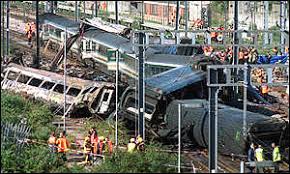
On 18 January 2026, a high-speed passenger train derailed near Adamuz, Córdoba, Spain. A second train crashed into it and was also derailed. The incident killed at least 40 people and injured 292 others, including 15 in critical condition. The disaster has sent shockwaves through a nation that prides itself on having one of Europe’s most advanced and safest rail systems.
This tragedy marks Spain’s deadliest train accident in more than a decade, raising urgent questions about rail safety and infrastructure management. Spain has the largest high-speed rail network in Europe for trains moving over 250 kph, with more than 3,100 kilometres of track. The collision has disrupted services and left hundreds of families searching for loved ones.
How the Accident Unfolded
The crash took place Sunday at 7:45 p.m. when the tail end of a train carrying 289 passengers on the route from Malaga to the capital, Madrid, went off the rails. It slammed into an incoming train traveling from Madrid to Huelva, another southern Spanish city. The impact tossed the second train’s lead carriages off the track, sending them plummeting down a 4-meter (13-foot) slope.
Survivors described harrowing scenes. Passengers reported climbing out of smashed windows, with some using emergency hammers to break the windows. One journalist on board said “there was a moment when it felt like an earthquake and the train had indeed derailed.” The impact was so incredibly violent that bodies were found hundreds of meters away.
A Mysterious Accident
What makes this disaster particularly puzzling is that it occurred under seemingly ideal conditions. The accident occurred on a section of track consisting of “a straight line” that was renovated in May 2025, with €700 million invested in that section of track, which was “supposedly in perfect condition”. The Iryo train that derailed was described as “relatively new”, having been manufactured in 2022 and passing its last safety inspection on 15 January 2026.
Spain’s Transport Minister Óscar Puente said the cause of the crash remains unknown, but added it was “extremely unusual” as it happened on a straight stretch of track which had been recently renovated. However, concerns had been raised previously. Train drivers’ union SEMAF warned railway operator Adif in August 2025 of heavy wear and tear on tracks, including where the derailments happened. This included potholes, bumps, and imbalances in overhead power lines that were causing frequent breakdowns. Allegedly, no action had been taken despite the warnings. The first investigations pointed towards a faulty rail weld as the most likely cause of the crash.
National Mourning and Investigation
Spanish Prime Minister Pedro Sánchez declared three days of national mourning for the victims of the crash. Emergency services have established DNA collection centres across multiple cities to help identify victims, while rescue teams continue searching through the twisted wreckage for those still missing.
For a country that has long celebrated its high-speed rail achievements, this disaster represents a sobering moment. The investigation will need to determine whether this was a tragic isolated incident or a sign of deeper systemic issues. As authorities work to uncover the truth, this crash serves as a stark reminder that even the most advanced transportation systems require constant vigilance and maintenance to ensure passenger safety.