

Vanity Fair’s White House Photographs Ignite National Debate Over Political Portraiture
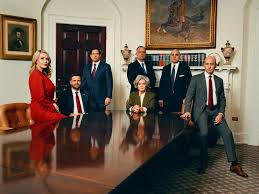
Controversy Erupts Over Unvarnished Trump Administration Portraits
Extreme close-ups of President Trump’s inner circle — including Karoline Leavitt, Susie Wiles, JD Vance and Marco Rubio — have set the internet alight since leaving the bounds of Vanity Fair and its bombshell White House tell-all yesterday. The photographs, taken by Christopher Anderson for a two-part feature on the Trump administration’s first year, have sparked intense debate about the role of retouching in political journalism.
The Photographer’s Uncompromising Approach
Anderson’s objective “when photographing the political world, is to make photographs that cut through the staged-managed image to reveal something more real and for the images to honestly portray the encounter that I had at that moment,” the photographer explained. “I guess I find it shocking that people would expect that journalistic photos should be retouched. Celebrity photos are celebrity photos. Politicians are not celebrities.”
The photos included severe close-ups, which show every imperfection on the faces of the politicians who usually appear without a hair out of place. The stark portraits revealed skin blemishes, wrinkles, and in some cases, what appeared to be cosmetic procedure marks, particularly drawing attention to Press Secretary Karoline Leavitt’s close-up.
Administration Pushback and Public Response
Secretary of State Marco Rubio claimed the photos were “deliberately manipulated.” Wiles called it a “disingenuously framed hit piece” in which “Significant context was disregarded and much of what I, and others, said about the team and the President was left out of the story.” The controversy extended beyond the photographs themselves, as the accompanying article featured candid comments from Chief of Staff Susie Wiles about administration officials.
The unvarnished look at some of the most powerful people in the country is an increasingly rare sight. Social media reactions ranged from praise for Anderson’s journalistic integrity to accusations of partisan bias. One social-media user predicted it would “make art history and photography classes discussions alive again.”
Implications for Political Photography
The incident highlights growing tensions between public expectations shaped by filtered social media content and traditional photojournalistic standards. Anderson has said he trains his lens on everyone equally, regardless of political party. Looking back across his work, it’s fair to say that he approaches both major parties with the same incisive eye. This controversy underscores broader questions about authenticity, media representation, and the extent to which powerful figures should be presented to the public without cosmetic enhancement.