

Chagos Islands Deal: Trump Reverses Support as UK Finalises Historic Sovereignty Transfer
The Significance of the Chagos Islands Agreement
The Chagos Islands have emerged as a focal point of international diplomacy following the UK’s controversial decision to transfer sovereignty of the Indian Ocean archipelago to Mauritius. On 22 May 2025 the Prime Minister of the United Kingdom Keir Starmer signed a formal agreement on the transfer of sovereignty of the Chagos Islands to Mauritius. This historic deal, which ends more than two centuries of British control, has become increasingly contentious due to its implications for regional security and the future of the strategically vital Diego Garcia military base.
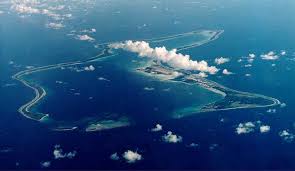
The Chagos Islands are an archipelago in the Indian Ocean, approximately 1,250 miles north-east of Mauritius. The largest of the islands, Diego Garcia, is home to a joint UK-US military base. The base has been described as a critical asset for operations in the Middle East, South Asia and East Africa, making the sovereignty question a matter of international strategic importance.
The Deal’s Terms and Financial Implications
In May 2025, Britain said it would pay Mauritius 101 million pounds ($136 million) per year – calculated to be worth 3.4 billion pounds over the lifetime of the deal – to secure the future of the Diego Garcia military base under a 99-year lease. Under the agreement, the UK retains operational control of Diego Garcia and a surrounding buffer zone, ensuring continued operation of the military facility whilst recognising Mauritius’s sovereignty over the broader archipelago.
The deal emerged from years of international pressure. In 2019, the International Court of Justice (ICJ) ruled in its favour, saying the UK was “under an obligation to bring to an end its administration of the archipelago as rapidly as possible”. British officials argued that without this agreement, the legal status of the base would remain uncertain and vulnerable to international challenge.
Trump’s Dramatic U-Turn and Political Fallout
In an unexpected development, President Trump has accused the UK of “great stupidity” over its decision last year to give up sovereignty of the Chagos Islands, an archipelago in the Indian Ocean that’s home to one of the most important U.S.-U.K. military bases, at Diego Garcia. Trump suggested that Britain’s decision to cede the islands to Mauritius is one of the reasons behind his desire to take over the semiautonomous territory of Greenland, which is controlled by Denmark.
This represents a significant reversal from the Trump administration’s earlier position. The Trump administration previously supported the Chagos Islands deal, with Secretary of State Marco Rubio issuing a statement in May last year saying, “following a comprehensive interagency review, the Trump Administration determined that this agreement secures the long-term, stable, and effective operation of the joint U.S.-UK military facility at Diego Garcia.” Rubio said at the time that Mr. Trump had “expressed his support for this monumental achievement during his meeting with Prime Minister Starmer at the White House,” calling the base “a critical asset for regional and global security.”
Concerns and Broader Implications
The agreement has faced criticism from multiple quarters. Prime Minister Keir Starmer has pressed ahead with the plan despite concerns about the £3.4 billion ($4.6 billion) cost, as well as opposition from Conservative Party leader Kemi Badenoch, Reform UK leader Nigel Farage and independence-seeking ethnic Chagossians. Many Chagossians have protested their exclusion from negotiations about their ancestral homeland.
The deal includes provisions for displaced Chagossians. The deal calls for a resettlement fund to be created for displaced islanders to help them move back to the islands, apart from Diego Garcia. However, their continued exclusion from Diego Garcia itself remains a point of contention.
For British readers, the Chagos Islands agreement represents a complex balancing act between historical justice, strategic necessity, and contemporary geopolitics. Whilst the UK government maintains the deal protects national security interests and resolves a long-standing legal dispute, Trump’s criticism highlights the unpredictable nature of international relations and raises questions about Western unity in an increasingly contested global landscape. The treaty’s ratification, expected in early 2026, will be closely watched by allies and adversaries alike.