

Worm ‘Blood’ Moon: Full Moon March 2026 and Total Lunar Eclipse
Introduction: Why the full moon March 2026 matters
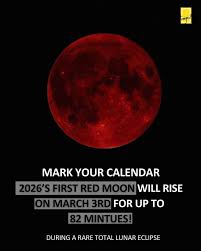
The full moon in March 2026, commonly called the Worm or “Blood” Moon, is notable this year because it coincides with a total lunar eclipse. Astronomical events that combine a full moon and an eclipse draw interest from both skywatchers and scientists: they offer striking visuals, public engagement opportunities and routine moments for monitoring lunar and atmospheric conditions. Accurate timing and phase information help people plan viewing or photography sessions across different time zones.
Main story: Timing, calendars and what to expect
Official peak and eclipse timing
According to reported sources, the March full moon reaches its peak on the morning of Tuesday, 3 March 2026, at 6:38 a.m. Eastern Time (ET/EST). That peak is identified as the Worm “Blood” Moon for this cycle and is accompanied by a total lunar eclipse, making the event especially notable for observers.
Calendar variations and phase context
Some moon phase calendars list the full moon on Wednesday, 4 March 2026. Such differences arise from time-zone offsets and the particular reference time used by each calendar. For clarity, the wider March 2026 phase sequence reported in available calendars shows waxing gibbous on 1–2 March, a full moon in early March, followed by waning gibbous from 5–10 March, last quarter around 11–12 March, a new moon on 18 March, first quarter around 25–26 March, and waxing gibbous again toward the month end.
Viewing and public interest
The combination of a full moon and a total lunar eclipse tends to increase public interest and local viewing events. While precise regional visibility depends on geography and local weather, the timing information above allows organisers and enthusiasts to confirm whether the eclipse will be observable from their location and to prepare equipment or public viewings.
Conclusion: Significance and outlook
The full moon March 2026 stands out because of its concurrence with a total lunar eclipse, offering an accessible and dramatic astronomical display. Observers should check local timing and weather forecasts—taking into account time-zone differences between listings—to determine the best opportunities to view the Worm “Blood” Moon. For those who miss the event, the March phase calendar provides a clear sequence of lunar phases through the month for planning future observations.