

When Is the Shortest Day of the Year? Everything You Need to Know About Winter Solstice 2025
Understanding the Winter Solstice
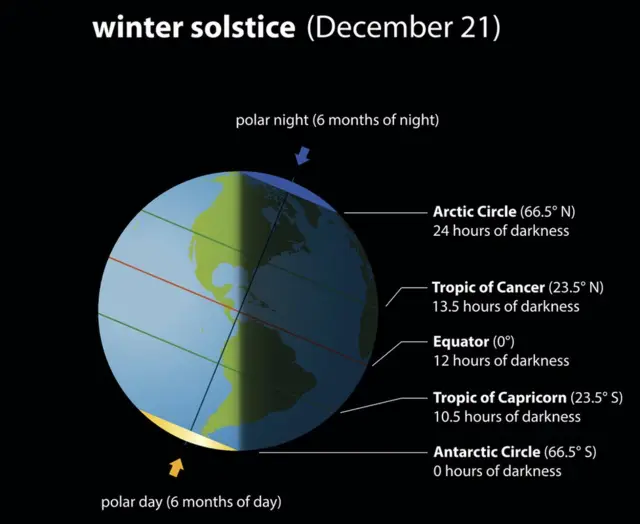
The shortest day of the year in 2025 occurs on Sunday, 21st December, marking the winter solstice in the Northern Hemisphere. The 2025 December solstice happens at 15:03 UTC (9:03 a.m. CST), or 3:03pm GMT in the UK. This astronomical event represents the day in which we experience the least amount of daylight throughout the entire year.
Why the Shortest Day Occurs
The variation happens because the Earth orbits at an angle: it is tilted 23.4 degrees on its axis. During the winter solstice, the Northern Hemisphere is tilted the farthest away from the Sun, resulting in the Sun following its lowest path across the sky. The shortest day lasts 7 hours 49 minutes and 42 seconds in London, which is 8 hours, 49 minutes shorter than the summer solstice.
Regional Variations in Daylight
The impact of the winter solstice varies considerably depending on location. In New York City and Chicago, the difference between the solstices is on the order of six hours, whilst in Minneapolis and Portland, the difference climbs to nearly seven hours, and in Seattle, there is about seven hours and 34 minutes less daylight compared to the summer solstice.
What Happens After the Solstice
The good news for anyone tired of shorter days is that the winter solstice marks the turning point, and after Dec. 21, the days will slowly start to lengthen again. The change is small at first, just a few seconds each day, but it’s the first step back toward longer evenings as winter unfolds. For cultures worldwide, this has historically been a time of celebration and hope, symbolising the return of light.
Cultural Significance
Winter solstice is an important time for cultures across the globe. People from the UK and beyond visit the ancient site of Stonehenge to celebrate the winter and summer solstices, as it’s possible to glimpse the Sun’s rays through the stones, which are positioned to align with the path of the Sun. This ancient connection demonstrates how significant this astronomical event has been throughout human history, offering a moment to reflect on seasonal cycles and the gradual return of longer, brighter days ahead.