

When Is the Shortest Day of the Year? Winter Solstice 2025 Guide
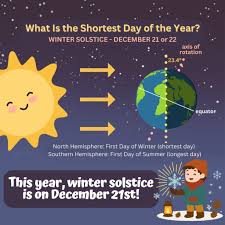
Understanding the Winter Solstice
The shortest day of the year, known as the winter solstice, is fast approaching. In 2025, the winter solstice falls on Sunday, 21 December, marking a significant astronomical moment for the Northern Hemisphere. This annual event has captivated humanity for millennia, inspiring celebrations and traditions across cultures worldwide.
The day of the winter solstice is the shortest day of the year, which means that it’s the day in which we experience the least amount of daylight. This year, the winter solstice occurs at 10:03 a.m. EST (15:03 UTC) on Sunday, 21 December, though the exact timing varies depending on your location and time zone.
The Science Behind the Shortest Day
The winter solstice is rooted in Earth’s astronomical behaviour. The Earth orbits at an angle: it is tilted 23.4 degrees on its axis. On the December solstice, Earth’s northern axis is tipped away from the sun, causing the fewest hours of daylight in the Northern Hemisphere.
Daylight duration varies considerably depending on latitude. In Canada, daylight can be as short as 4 hours and 20 minutes in Iqaluit, NU, to as long as 8 hours and 56 minutes in Toronto, with the longest daytime being in Kingsville, on the shores of Lake Erie, where they will see the Sun for around 9 hours and 7 minutes.
Cultural Significance and Celebrations
The winter solstice marks the official beginning of astronomical winter. For thousands of years, cultures worldwide have celebrated this turning point when daylight begins to return. Under the old Julian Calendar, the winter solstice occurred on 25 December. With the introduction of the Gregorian calendar the solstice slipped to the 21st, but the Christian celebration of Jesus’s birth continued to be held on 25 December.
The most famous celebration is at Stonehenge, a 5,000-year-old structure in England built to align with the sun at the solstice. Modern celebrations continue this ancient tradition, with people gathering to witness the sunrise on this astronomically significant day.
Looking Ahead: Days Getting Longer
After the shortest day, the days start getting longer and the nights shorter. This gradual return of light has long been seen as a symbol of hope and renewal, making the winter solstice a meaningful moment for reflection and celebration. Whether you mark it through ancient traditions or simply appreciate the astronomical phenomenon, the shortest day reminds us of Earth’s endless celestial dance around the sun.