

International Space Station Continues Historic Mission as It Enters Final Five Years
A Quarter Century of Human Achievement in Orbit
On Nov. 2, 2025, NASA honored 25 years of continuous human presence aboard the International Space Station. This remarkable milestone represents one of humanity’s greatest collaborative achievements, bringing together space agencies from around the world to maintain a permanent laboratory orbiting 250 miles above Earth. The ISS remains a bustling hub of scientific discovery, where researchers conduct experiments impossible to perform on Earth and prepare for future missions to the Moon and Mars.
Record-Breaking Milestones and Current Operations
The International Space Station recently achieved an unprecedented feat. For the first time in International Space Station history, all eight docking ports aboard the orbital outpost are occupied following the reinstallation of Northrop Grumman’s Cygnus XL cargo spacecraft to the Earth-facing port of the station’s Unity module. This historic moment demonstrates the station’s role as an active international hub for space operations.
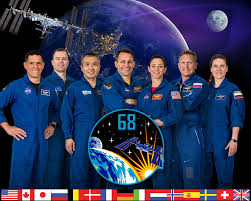
Currently, Three new residents are living aboard the space station following the arrival of the Soyuz MS-28 spacecraft on Thursday, Nov. 27, 2025. NASA astronaut Chris Williams and Roscosmos cosmonauts Sergey Kud-Sverchkov and Sergei Mikaev will stay in space until July 2026, conducting advanced space research benefiting humans living on and off Earth. The crew continues vital research in areas ranging from biomedical studies to artificial intelligence applications.
Cutting-Edge Research and Future Plans
The station’s research programme remains robust and innovative. Stanford researchers have become the first to demonstrate that machine-learning control can safely guide a robot aboard the ISS, laying the groundwork for more autonomous space missions. This breakthrough in AI-controlled robotics represents a significant step forward for future space exploration.
However, the station is entering its final chapter. After 25 years of continuous human presence, the International Space Station is heading into its final half decade of planned habitation. NASA and its international partners are planning to intentionally deorbit the orbiting laboratory around 2030 or shortly thereafter. SpaceX was contracted valued at up to $843 million to build the United States Deorbit Vehicle (USDV), which will help guide the space station towards a splashdown in an uninhabited portion of the Pacific Ocean.
Significance for Future Space Exploration
As the ISS approaches its planned retirement, its legacy continues to grow. The station has hosted More than 270 spacewalks dedicated to the space station have been accomplished in the last quarter century. These missions have not only maintained the orbital laboratory but also provided crucial data for future exploration ventures. As part of NASA’s SpaceX Crew-12 mission, four crew members from three space agencies will launch no earlier than Sunday, Feb. 15, 2026, to the International Space Station for a long-duration science expedition.
The International Space Station remains a testament to international cooperation and human ingenuity, serving as an irreplaceable platform for scientific discovery whilst preparing humanity for its next giant leap into deep space exploration.