

Championship League Table: How Standings Shape the Season
Introduction: Why the championship league table matters
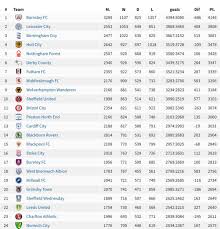
The championship league table is the central reference for clubs, managers and supporters during a season. It summarises performance, decides promotion and relegation outcomes, and often determines financial and sporting futures for teams. For fans it provides an immediate snapshot of form and aspiration; for clubs it underpins strategic decisions on transfers, selection and investment.
Main body
How the table is constructed
At its simplest the championship league table ranks clubs by points accumulated across matches. The widely used scoring system awards three points for a win, one for a draw and none for a loss. When teams finish level on points tie‑breakers such as goal difference (goals scored minus goals conceded) and total goals scored are commonly applied. Some competitions use additional criteria, including head‑to‑head records, depending on the rules in place.
What the table reflects beyond results
While the table records outcomes, it also reflects deeper trends: defensive solidity, scoring consistency, squad depth and the effect of injuries or fixture congestion. Midseason fluctuations can be influenced by managerial changes, transfer window activity or a run of postponed fixtures. Observers frequently use rolling form (results over recent matches) shown alongside the main table to gauge whether a team is improving or regressing.
Consequences and turning points
Positions in the championship league table carry tangible consequences. High finishes often lead to promotion, greater revenue and higher expectations; low finishes can result in relegation, budget reductions and restructuring. Many leagues also offer play‑off routes to promotion, making end‑of‑season place shifts especially dramatic. As a result, late‑season fixtures often have heightened intensity and attention from media and supporters.
Conclusion: What readers should look for
Readers following the championship league table should watch trends rather than single results: goal difference, recent form and fixture difficulty provide context to a club’s standing. Over a full season, consistency usually outweighs short spurts of success. For fans and stakeholders, the table is both a record and a forecast — a tool for understanding present performance and anticipating likely outcomes as the season unfolds.