

How the new champions league format works
Introduction: Why the champions league format matters
The champions league format has been overhauled for the post-2024 era, affecting clubs, broadcasters and supporters across Europe. The change from the traditional group stage to a single 36-team league phase alters matchups, scheduling and qualification dynamics, with implications for competitive balance and club revenues. Understanding the new structure is essential for fans following their team’s route through Europe.
Main details of the new format
Single league phase and match schedule
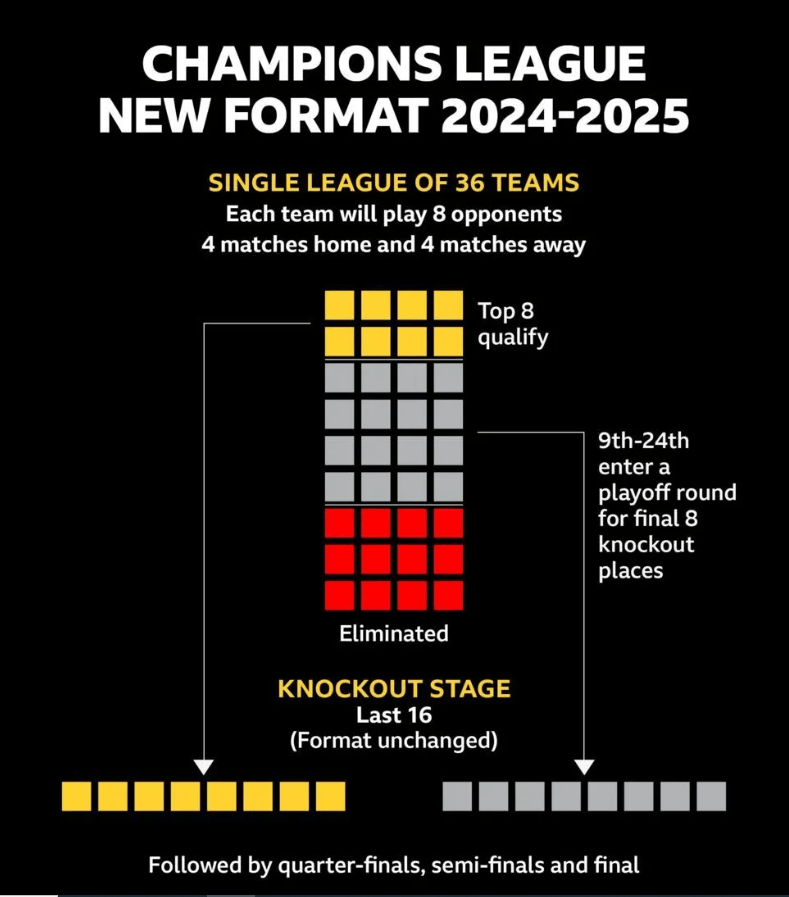
The revamped competition features a single league phase comprising 36 teams instead of the previous group-stage model. Each club now plays eight different opponents in this phase — four matches at home and four away. Under the new system, sides will no longer face three opponents twice as they did in the old group format.
Progression to the knockout stages
At the end of the league phase, the standings determine the last-16 matchups. Clubs finishing in the top eight of the league phase are seeded and will be drawn against the winners of the knockout play-offs in the round of 16. This introduces a clearer reward for finishing high in the league phase while keeping an intermediate knockout play-off to determine some last-16 participants.
Scheduling and match windows
Standard Champions League match weeks remain on Tuesdays and Wednesdays. However, in Champions League exclusive weeks — when no other UEFA club competitions are scheduled — matches can be played across Tuesday, Wednesday and Thursday. This adjustment aims to ease calendar congestion and create additional broadcast windows in certain weeks.
Context and implications
The expanded format increases the number of participating clubs and diverse fixtures, offering more clubs exposure to high-profile European matches. For English football, the BBC source notes that six English clubs qualified for the competition this season, illustrating the domestic significance of Champions League places.
Conclusion: What readers should expect
The new champions league format marks a substantive change to European club football: more teams, a single league phase with eight matches per club, and a revised route to the last 16. Fans should expect a broader range of opponents, adjustments to midweek scheduling and heightened importance on finishing in the top eight of the league phase. The new structure is likely to reshape tactical approaches and commercial planning as clubs adapt to the expanded competition.