

WTA Live Rankings: How They Work and Why They Matter
Introduction: Why wta live rankings matter
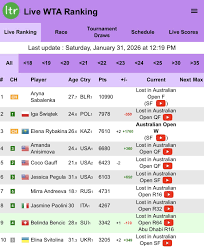
WTA live rankings are a real‑time reflection of player standing in women’s professional tennis. They matter because rankings determine tournament entry, seedings, and often influence sponsorship and scheduling decisions. For fans and commentators, live rankings add immediacy: they show how match results will alter the pecking order as tournaments progress, not only after a weekly update.
How wta live rankings work
The WTA ranking system uses a rolling period to allocate points based on results at tournaments of varying importance. Players accumulate points from their best results across a set number of events (singles typically count a player’s best 16 results in a 52‑week window). Tournaments are tiered — Grand Slams, top‑level WTA events, and lower‑tier events — and higher‑tier events award more points, so deep runs at major tournaments have disproportionate influence on a player’s total.
Live rankings track the provisional movement of those totals during ongoing tournaments. As players advance or are eliminated, their projected ranking can rise or fall in real time, reflecting the replacement of one result with a better or worse performance within that rolling window. This gives coaches, players and followers an immediate sense of potential points gains or losses before official rankings are published.
Practical effects and recent trends
For players, live rankings can affect tactical decisions, such as tournament entry or whether to prioritise rest over a lower‑point event. For tournament organisers and broadcasters, live updates create narratives — for example, when a surprise run could vault a competitor into seeded status. For fans and analysts, live rankings make it easier to anticipate qualification scenarios for season finals and national selection.
Conclusion: Significance and outlook
WTA live rankings have made the sport more transparent and engaging by showing immediate consequences of match results. They are likely to remain an integral tool for decision‑making across the tour and for fan engagement. As technology and data presentation evolve, live ranking displays may become even more sophisticated, offering clearer scenarios and forecasts for players, coaches and supporters.