

Eric Bristow: Remembering the Darts Legend Who Changed the Game Forever
The Importance of Eric Bristow’s Legacy in Modern Darts
Eric Bristow remains one of the most influential figures in the history of professional darts, even years after his untimely passing. Even in 2025, his legacy endures, influencing new generations of darts players and fans alike. Known as “The Crafty Cockney,” Bristow brought personality and flair to the sport, becoming a household name in the UK and around the globe. His impact on darts extends far beyond his impressive trophy collection, fundamentally transforming the game from a pub pastime into a televised spectacle that captivates millions.
A Glittering Career That Defined an Era
Eric John Bristow (25 April 1957 – 5 April 2018) was an English professional darts player nicknamed “the Crafty Cockney”. One of the most recognisable and successful players of the 1980s, Bristow was a five-time BDO World Darts Champion, a five-time World Masters Champion, a four-time WDF World Cup singles champion, and a two-time winner of the News of the World Darts Championship; he was ranked world number one on multiple occasions. The 1980s belonged to Eric Bristow. He dominated the World Championships, securing five titles in 1980, 1981, 1984, 1985 and 1986.
His achievements weren’t limited to world championships. Bristow was a winner of the World Cup Singles on four occasions (1983 beating Jocky Wilson, 1985 beating Tony Payne, 1987 beating Bob Sinnaeve and 1989 beating Jack McKenna) and won the News of the World Darts Championship in 1983 beating Ralph Flatt and 1984 beating Ian Robertson (becoming only the second man in 57 years to successfully defend that title) together with countless other major tournaments including the British Open and Swedish Open three times each and the North American Open on four occasions.
Overcoming Adversity and Shaping the Sport’s Future
Bristow’s career wasn’t without challenges. During the Swedish Open in November 1986, Bristow found himself unable to let go of his darts properly – a psychological condition known as dartitis, similar to the yips in golf. He was never quite the same player again, but did regain the number-one ranking briefly in late 1989 and early 1990 before losing his form again. Despite this setback, his contributions to the sport continued.
One of Bristow’s most significant contributions was mentoring a young Phil Taylor, who would go on to become the greatest darts player of all time. This act of mentorship demonstrates how Bristow’s influence extended beyond his own achievements. In 1993, he became involved in the split in darts as one of the 16 players who left the British Darts Organisation (BDO) to form the World Darts Council, which later became the Professional Darts Corporation (PDC).
A Legacy That Lives On
In April 2018, he suffered a heart attack while attending a Premier League Darts event in Liverpool and died at the age of 60. His sudden passing shocked the darts world, but his impact remains undeniable. On learning of Bristow’s death, PDC chairman Barry Hearn said “We often talk about the absence of characters in sport but Eric Bristow was a character with a capital ‘c’. He understood what crowds wanted to see – he was controversial, he was a maverick, he spoke his mind and upset a few people from time to time, but the man in the street warmed to him because he was very much one of theirs.”
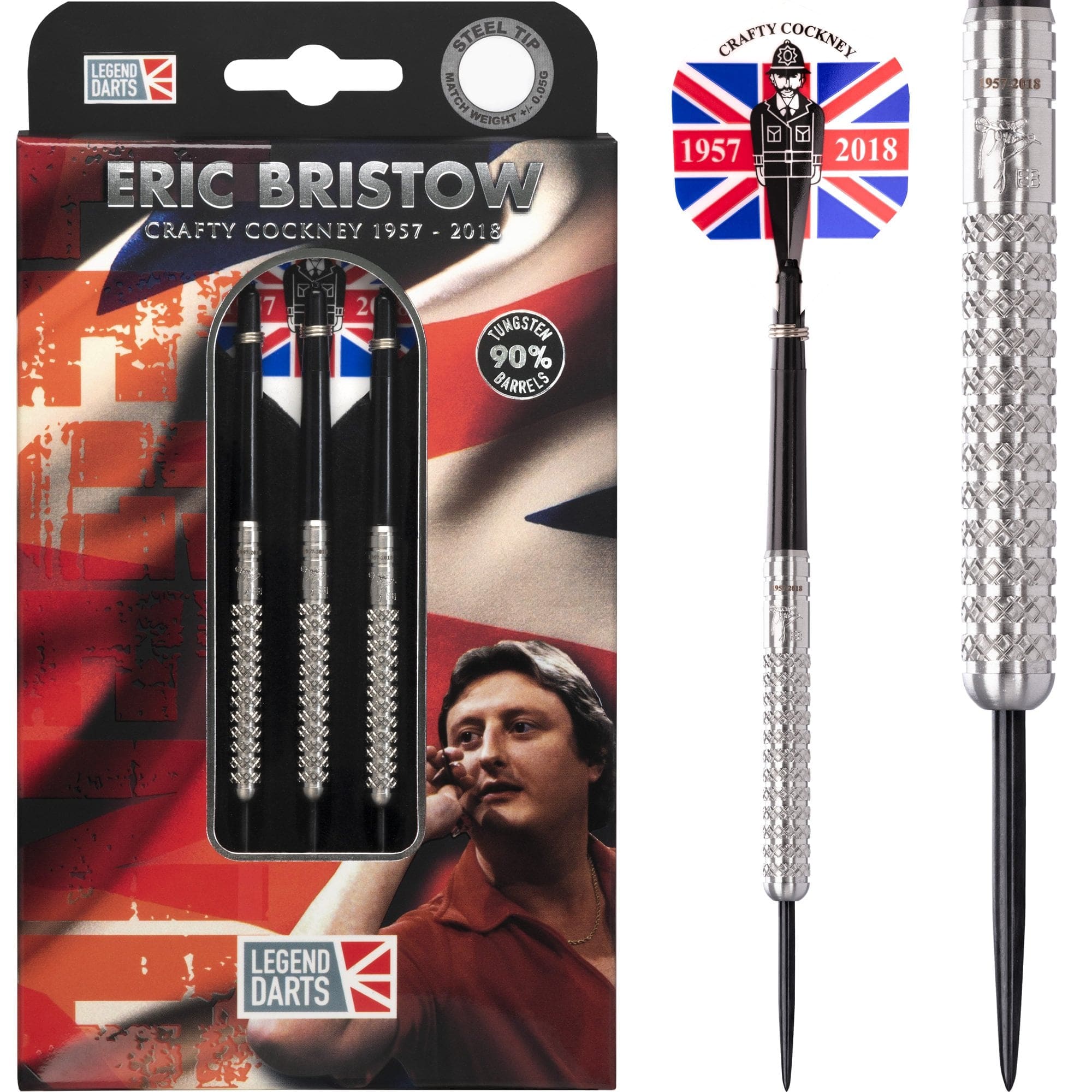
Today, Eric Bristow’s name lives on through signature dart ranges that bear his iconic “cocked finger” hallmark, commemorating a legend who transformed professional darts forever. His story serves as inspiration for aspiring players worldwide, proving that dedication, personality and showmanship can elevate a sport to unprecedented heights.