Introduction: A New Era for European Football
The UEFA Champions League has undergone its most significant transformation in decades, introducing a revolutionary format that has reshaped Europe’s premier club competition. This is only the second year under UEFA’s new structure. The changes affect everything from qualification to knockout progression, making it essential for football fans to understand how the competition now operates. With Europe’s elite club competition back for its 71st season and its 34th since it was renamed the UEFA Champions League, this format represents a bold step into the future of continental football.
The League Phase: A Revolutionary Structure
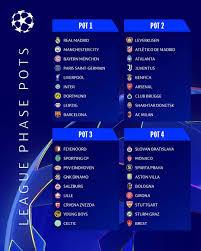
The most dramatic change is the abandonment of the traditional group stage. Gone are the familiar eight groups; instead, 36 clubs now sit in one league table. Rather than the previous 32-team format, there will now be one league consisting of all 36 teams to reach this stage of the tournament. Each team faces eight different opponents, split evenly between home and away fixtures. The matches run from September 2025 through January 2026, with three points awarded for a win and one for a draw, but qualification is no longer straightforward.
Qualification Pathways: Who Progresses?
The new format creates multiple pathways to the knockout rounds. The top 8 teams after Matchday 8 progress directly to the round of 16. Meanwhile, clubs finishing between 9th and 24th must negotiate a two-legged play-off to reach the knockouts. The consequences for underperformance are severe: the bottom 12 are eliminated entirely, with no second chance in the Europa League. Teams who finished in the top four positions in the Champions League table will be given home second legs for the last 16 and quarter-final rounds, providing significant strategic advantage.
Key Dates and Timeline
The Champions League knockout phase play-off draw takes place at 11am UK time on Friday January 30. The knockout stages then progress through February and March, with semi-finals on April 28-29 and May 5-6, culminating in the final on Saturday, May 30, 2026 at Budapest’s Puskás Aréna.
Conclusion: Implications for Football’s Future
This format transformation represents UEFA’s ambition to create more competitive and meaningful matches throughout the competition. The single league table ensures every fixture carries weight, while the expanded knockout play-offs give more teams hope of progression. For fans, this means more high-stakes European football across a longer season. The format’s success will likely influence future reforms across UEFA competitions, making the 2025/26 season a pivotal moment in European football history. As clubs adapt their strategies to this new landscape, the competition promises unprecedented drama and excitement.