

Curling Scoring: How Points, Ends and Strategy Work
Introduction
Curling scoring is central to understanding one of winter sport’s most strategic games. Accurate knowledge of how points are awarded — including the role of the house, the hammer and measuring — helps players make tactical choices and enables spectators to follow matches at club, national and Olympic levels. Clear scoring rules also determine outcomes in tight contests, where a single stone can decide a game.
Main body
Basic rules and structure
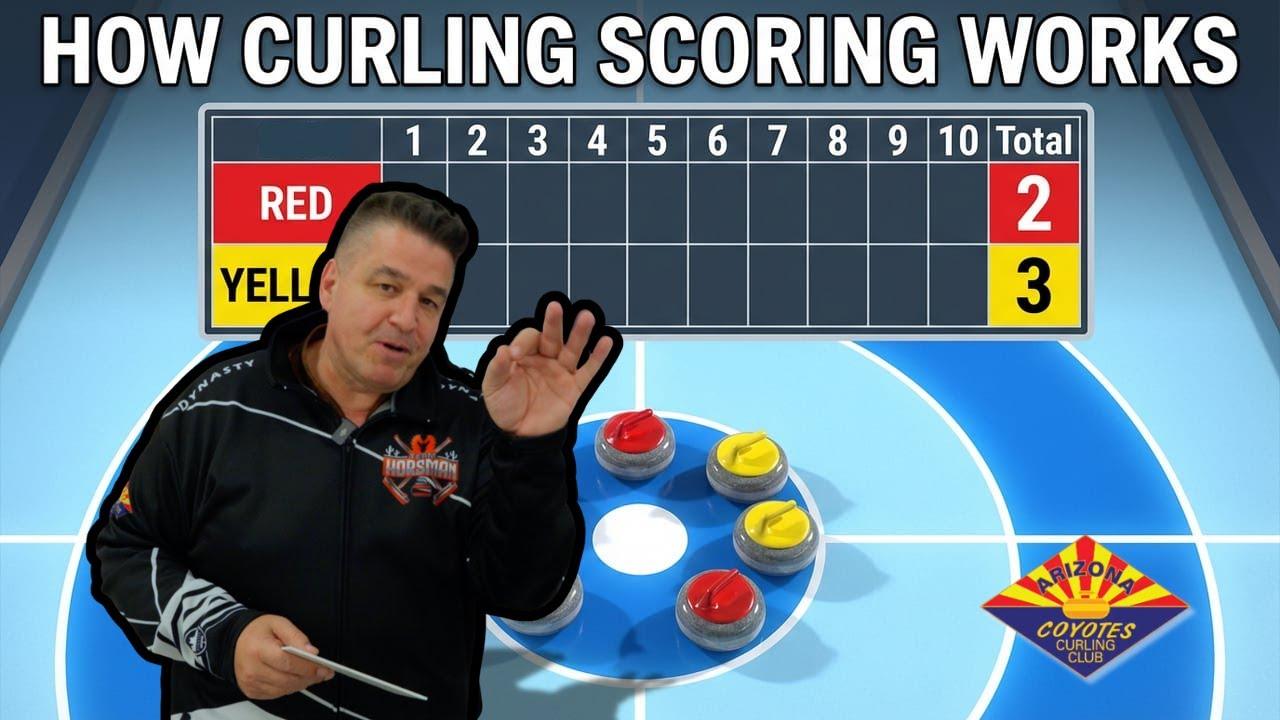
A standard curling game is divided into ends. In each end both teams deliver eight stones alternately (16 stones total). The scoring is decided only after all stones for that end have been played. Only stones resting in the house — the circular target — are eligible to score. The centre of the house is called the button, and distance from the button determines proximity.
How points are counted
After an end, the team with the stone closest to the button scores. That team receives one point for every one of its stones that is closer to the button than the opponent’s nearest stone. Points are whole numbers: 1, 2, 3, and so on. If no stones are in the house, the end is blank and no points are scored. The team that scores relinquishes the hammer (the advantage of throwing last) to the opponent for the next end; if an end is blank, the hammer is retained.
Special situations and measurement
When it is visually unclear which stone is closer to the button, officials use a measuring device to determine scoring. If a stone barely touches the outermost ring of the house, it must be at least partially in the house to count. A team that scores without having the hammer is said to have executed a steal. If teams are tied after regulation ends, play proceeds to an extra end to decide the winner.
Conclusion
Understanding curling scoring clarifies many tactical choices: when to play offensively, when to blank an end to retain the hammer, and when to attempt a steal. For spectators and new players, focusing on the hammer, the house and end-by-end scoring quickly makes matches easier to follow. At higher levels, precise measurement and strict adherence to these scoring rules ensure fair, competitive outcomes in championships and the Olympics.