

World Cup 2026: The Biggest Tournament in Football History Approaches
Introduction: A New Era for the World Cup
The 2026 FIFA World Cup is poised to make history as the largest and most ambitious football tournament ever staged. Taking place from 11 June to 19 July 2026, the tournament will be jointly hosted by sixteen cities—eleven in the United States, three in Mexico, and two in Canada. This groundbreaking event marks several firsts: it will be the first tournament hosted by three nations and the first to include 48 teams, an expansion from 32. The significance extends beyond logistics, as Mexico will become the first country to host or co-host the men’s World Cup three times, following its previous hosting duties in 1970 and 1986.
Tournament Format and Key Developments
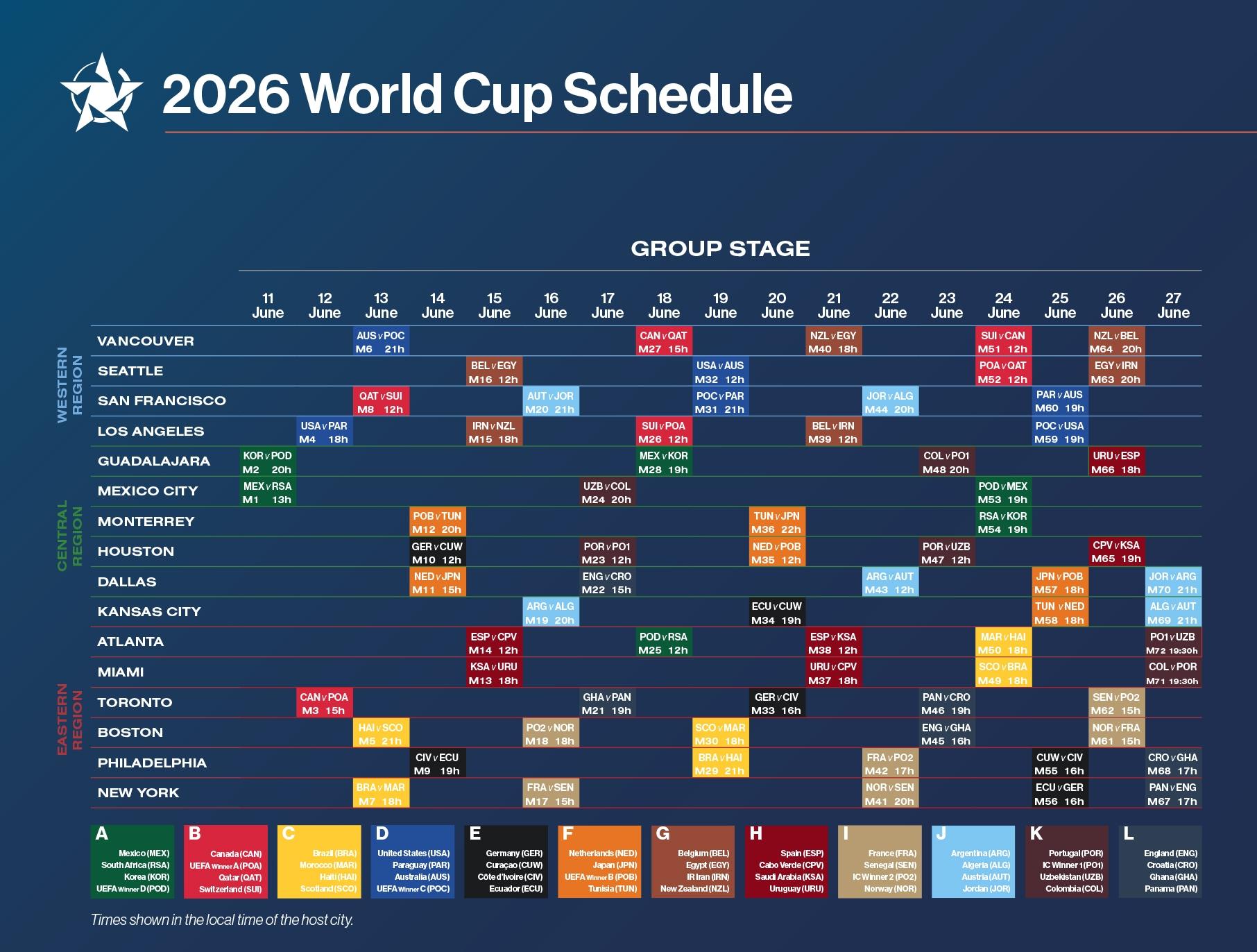
The expanded format brings substantial changes to the competition structure. Teams will be split into twelve groups of four, with the top two teams and eight best third-placed teams progressing to a new round of 32, increasing the total number of games from 64 to 104. Recent developments have captured global attention, particularly regarding the tournament draw. England will face a rematch of their 2018 semi-final against Croatia in their opening fixture, after they were drawn alongside Croatia in Group L, whilst Scotland will face Brazil and Morocco, as well as Haiti, in Group C. The opening match will include Mexico and South Africa on 11 June 2026 at the Estadio Azteca in Mexico City, with the World Cup final kicking off at 3 p.m. at MetLife Stadium in New Jersey on 19 July 2026.
Qualification Progress and Controversy
Qualification for the tournament has produced remarkable stories. Four teams secured qualification to their first men’s World Cup—Uzbekistan, Jordan, Cabo Verde and Curacao—with Curacao’s population of 185,494 making it the smallest nation ever to qualify. Twelve European teams have confirmed their places: Austria, Belgium, Croatia, England, France, Germany, Netherlands, Norway, Portugal, Scotland, Spain and Switzerland. However, the tournament has faced significant criticism over ticket pricing. The cheapest tickets for the 2026 World Cup final are priced at £3,120 ($4,185), prompting calls for FIFA to halt ticket sales after countries’ most loyal fans would face paying £3,000 for a final ticket. Despite the backlash, FIFA President Gianni Infantino justified the prices by announcing that the tournament had received over 150 million ticket requests.
Conclusion: Significance for Global Football
As the world’s most-watched sporting event prepares for its 2026 edition, the tournament promises unprecedented scale and global reach. With sixteen state-of-the-art venues across North America ready to welcome fans, and qualification still ongoing with playoff matches scheduled for March 2026, excitement continues to build. The expansion to 48 teams ensures greater representation from all continents, potentially creating new football narratives and underdog stories. Whilst controversies over pricing threaten to overshadow sporting matters, the 2026 World Cup remains a landmark moment for international football—one that will test FIFA’s ability to balance commercial ambitions with the sport’s core values of accessibility and inclusivity. For fans across the globe, the countdown to June 2026 represents both anticipation and apprehension about football’s evolving future.