

Cloudflare Down: Understanding the Global Internet Outage That Affected Millions
Introduction: When the Internet’s Backbone Stumbles
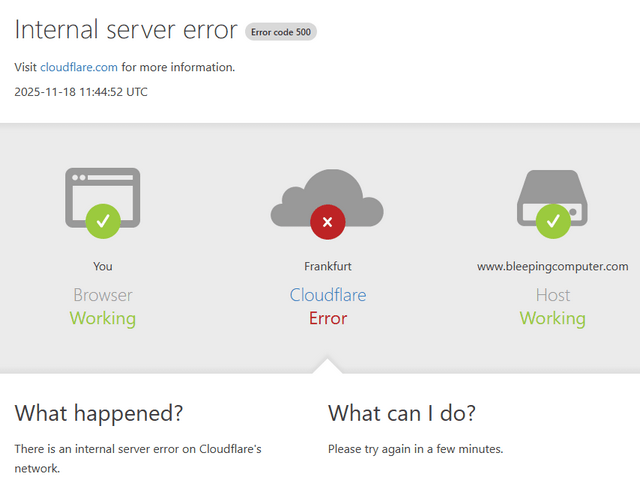
In an era where digital connectivity underpins nearly every aspect of modern life, the significance of internet infrastructure providers cannot be overstated. Cloudflare’s software is used by many businesses worldwide, helping to manage and secure traffic for about 20% of the web. When such a critical service experiences disruption, the ripple effects are felt globally. The outage affected much of the web: X, formerly known as Twitter, Substack, Canva and more appeared to have gone down. This incident serves as a stark reminder of how centralised internet infrastructure has become and the vulnerabilities that come with it.
What Happened During the Cloudflare Outage
On 18 November 2025 at 11:20 UTC, Cloudflare’s network began experiencing significant failures to deliver core network traffic. The disruption lasted several hours, leaving millions of users unable to access popular services. Major affected services included X, ChatGPT, Spotify, Canva, and League of Legends. Even Down Detector, the website people typically use to check for outages, was itself affected by the incident. The outage lasted 5 hours and 38 minutes, from 11:28 UTC to 17:06 UTC.
The Technical Cause Behind the Disruption
The outage was triggered by a bug in generation logic for a Bot Management feature file causing many Cloudflare services to be affected. More specifically, it was triggered by a change to one of Cloudflare’s database systems’ permissions which caused the database to output multiple entries into a “feature file” used by their Bot Management system. That feature file, in turn, doubled in size. The larger-than-expected feature file was then propagated to all the machines that make up their network. Importantly, the issue was not caused, directly or indirectly, by a cyber attack or malicious activity of any kind.
Broader Implications for Internet Infrastructure
This incident highlights concerning trends in modern internet architecture. Cloudflare outage impacted millions of websites worldwide, exposing a troubling truth about modern Internet infrastructure: a handful of companies now control critical chokepoints that can take down significant portions of the Web. The outage came just weeks after similar disruptions affecting Amazon Web Services and Microsoft Azure, prompting questions about the concentration of internet services. The number of service outages has “remained consistent,” but the “number of sites and applications dependent on these services has increased, making them more disruptive to users.”
Conclusion: Lessons for a Connected Future
The Cloudflare outage serves as a crucial wake-up call for businesses and internet users alike. While the company responded swiftly and transparently, identifying and resolving the issue within hours, the incident underscores the risks of over-reliance on single infrastructure providers. For businesses, this event emphasises the importance of implementing redundancy strategies and diversifying their internet infrastructure dependencies. For the broader internet ecosystem, it raises important questions about resilience and the need for more distributed approaches to critical internet services. As our digital dependence deepens, ensuring robust, fault-tolerant infrastructure becomes not just a technical concern, but a matter of global economic and social stability.