

Understanding the Northern line: route, role and recent context
Introduction
The Northern line is one of London Underground’s most important deep‑level routes, linking residential suburbs with central London business districts and transport hubs. Its complex branching and central tunnels make it vital for daily commuters, tourists and freight access to major rail interchanges. Understanding the line’s route, current state and ongoing improvements is relevant to anyone who travels across the capital.
Main body
Route and operations
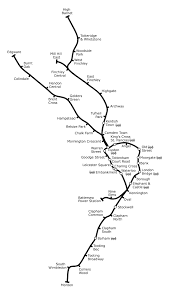
The Northern line runs from south to north with multiple branches. Southbound services converge on Morden, while northbound trains split towards Edgware and High Barnet, with a short spur serving Mill Hill East. Through central London the line operates two primary central branches commonly called the Bank and Charing Cross branches. The junction at Camden Town is a key divergence point, and the line is shown as black on the Tube map.
Role and passengers
As a deep‑level tube serving dozens of stations across inner and outer boroughs, the Northern line connects many major interchanges and employment centres. It provides important links to central business districts and rail termini, making it a backbone of the daily commute for hundreds of thousands of travellers. Its frequent services and multiple branches help distribute demand across the network, but they also create operational complexity.
Modernisation and challenges
Transport for London has prioritised upgrades on the Northern line in recent years, targeting station improvements, step‑free access where feasible, and signalling modernisation to increase capacity and reliability. Maintenance, engineering works and occasional disruption at junctions such as Camden Town are part of ongoing efforts to improve safety and performance. Passengers are advised to check live service information before travelling.
Conclusion
The Northern line remains central to London’s transport infrastructure, balancing high passenger demand with operational complexity from its branching structure. Continued modernisation is expected to improve capacity and reliability over time, though engineering work will periodically affect services. For passengers, staying informed through official TfL updates will ease journeys and help plan alternatives when sections are closed for upgrades.