

The Elizabeth Line: A New Era in London Transport
Introduction
The Elizabeth Line, recently opened in May 2022, marks a significant advancement in London’s transport network. Named after Queen Elizabeth II, this new railway service aims to enhance connectivity across the city and its surrounding areas, reducing travel times and congestion and providing an efficient alternative to other forms of transport.
Details of the Elizabeth Line
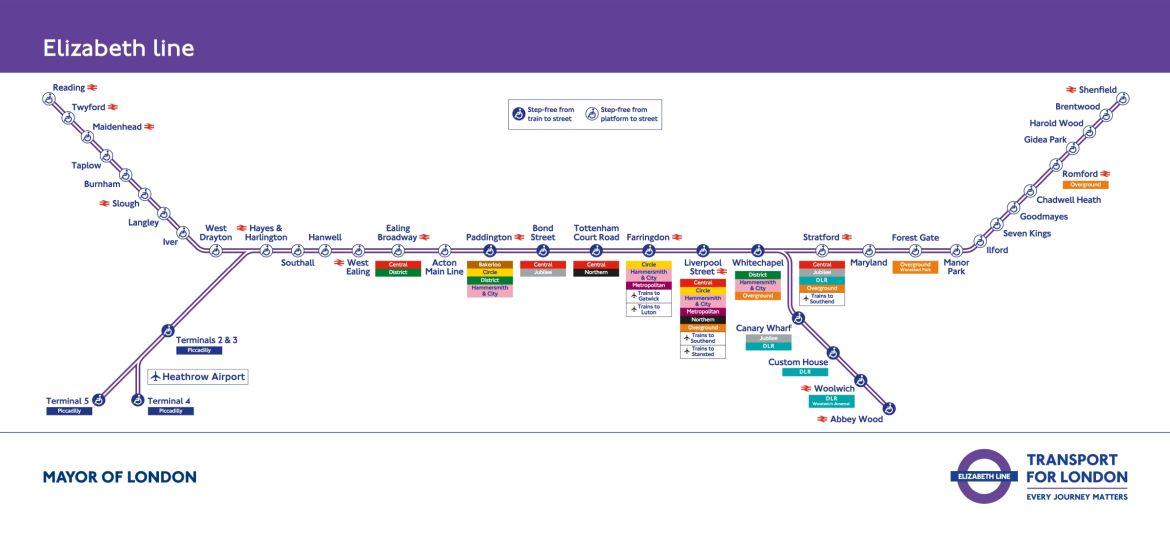
The Elizabeth Line runs from Reading and Heathrow in the west, through central London, and ends at Shenfield and Abbey Wood in the east. spanning over 60 miles, it features 41 stops, including key stations such as Paddington, Liverpool Street, and Canary Wharf. The line is designed to accommodate up to 24 trains per hour during peak periods, significantly increasing capacity across the network.
One of the most notable aspects of the Elizabeth Line is its state-of-the-art infrastructure, including spacious and modern carriages designed to enhance passenger comfort. The introduction of digital displays and improved accessibility features has also played a vital role in ensuring that the service caters to a diverse range of commuters.
Impact on Commuters and Local Economy
Since its launch, the Elizabeth Line has had a considerable impact on local economies along its route. By reducing travel times—e.g., a trip from Paddington to Canary Wharf takes just 17 minutes—it has made previously less accessible areas much more attractive for businesses and visitors alike. Moreover, the service is expected to boost job creation and encourage regeneration projects around the stations, invigorating local economies.
Future Developments
Looking ahead, further extensions to the Elizabeth Line are under consideration, which could enhance its reach even more. Transport for London (TfL) has already indicated interest in expanding the line to other suburban areas, potentially providing greater access to essential services and reducing car dependency in the region.
Conclusion
In conclusion, the Elizabeth Line represents a significant leap forward in London’s transport infrastructure, connecting areas that were previously underserved and enhancing the commuting experience for millions of passengers. As it continues to settle into its role within the network, the line’s anticipated impact on local economies and urban development will be closely monitored, making it a vital component of London’s transport future.