

Comparing Norway and New Zealand: Culture, Economy, and Geography
Introduction
The comparison between Norway and New Zealand sparks interest due to their geographical distance and strikingly different cultures. Both countries offer beautiful landscapes, vibrant cultures, and high quality of life; however, they represent diverse philosophies and approaches to governance, economics, and social welfare. Understanding these differences can provide insights into how geography shapes societal norms and values.
Geographical Overview
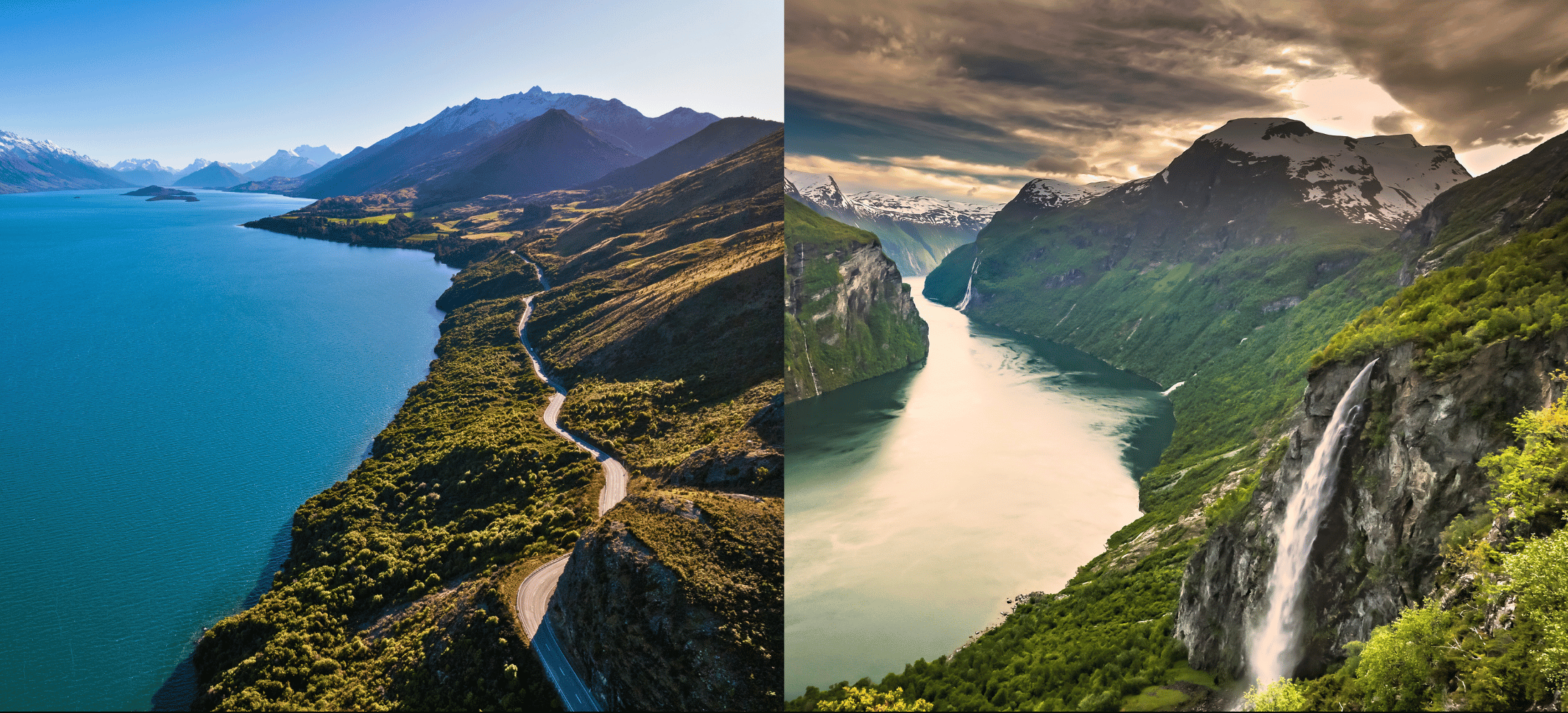
Norway, located in Northern Europe, is characterised by its rugged coastline and dramatic fjords, with a population of approximately 5.4 million. Its extensive natural beauty includes the Northern Lights and reindeers, attracting tourists year-round. In contrast, New Zealand, an island nation in the southwestern Pacific Ocean, comprises two main landmasses and has a population of around 5 million. Known for its stunning landscapes ranging from mountains to coastal regions, it is a popular destination for adventure tourism.
Cultural Aspects
The cultures of Norway and New Zealand reflect their unique heritage influences. Norway’s culture is deeply rooted in its Viking history, manifesting in traditional music, art, and celebrations such as Constitution Day. It values egalitarianism and is regarded as one of the happiest countries in the world, with high levels of social trust.
On the other hand, New Zealand is celebrated for its Māori culture, which plays a significant role in national identity. The Māori language and customs are integrated into everyday life, offering a rich tapestry of traditions. Additionally, New Zealand is known for its outdoor lifestyle and sporting culture, with rugby being particularly significant.
Economic Comparison
Both nations exhibit robust economies but differ in structure and reliance. Norway boasts a mixed economy supported by a combination of natural resources, including oil and gas, fisheries, and a strong welfare system. Its sovereign wealth fund is among the largest in the world, allowing it to maintain a high standard of living for its citizens.
In contrast, New Zealand has a more diverse economy built on agriculture, tourism, and manufacturing. The country is one of the world’s largest exporters of dairy products, and its tourism industry significantly benefits from its natural landscapes and adventure activities.
Conclusion
In conclusion, while Norway and New Zealand may seem worlds apart, both countries exemplify high standards of living and rich cultural identities shaped by their respective histories and environments. For those interested in cross-cultural studies, analysing these differences provides valuable insights into how geography and history influence society. Looking ahead, both countries continue to evolve, with Norway focusing on sustainable energy and New Zealand enhancing its cultural preservation amidst increasing globalisation.