

Greece Airspace Shutdown: Radio Interference Causes Major Travel Disruption
Unprecedented Aviation Crisis Hits Greece
On January 4, 2026, massive airborne radio interference disrupted nearly all frequencies in the Athens FIR, grounding flights across Greece and causing widespread delays. Flights across Greece were grounded for several hours on Sunday after a radio-frequency outage crippled air traffic control, stranding thousands of travelers and bringing airport operations to a virtual standstill. The timing could not have been worse, as today is among the busiest days of the holiday period, especially at the airports of the country’s two largest urban centers, Athens and Thessaloniki, as many travelers are returning from abroad.
What Caused the Airspace Closure
The Hellenic Civil Aviation Authority (HCAA) later clarified that the cause was massive radio interference affecting nearly all frequencies serving the Athens FIR, originating from the air – an incident it characterized as unprecedented in scale, geographical extent, and duration. Authorities said the disruption began just before 9am local time (07:00 GMT), when most aviation radio frequencies were hit by massive interference, forcing a precautionary shutdown of Greek airspace. While initial reports described the issue as a “technical failure” in radio communication systems, the HCAA’s detailed announcement specified intentional-like airborne jamming, prompting the deployment of a specially equipped aircraft to locate the source.
Impact on Travellers and Operations
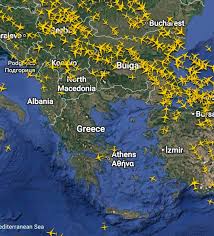
Thousands of travellers have been left stranded in Greece today as airport operations were brought to a halt after a collapse of radio frequencies crippled air traffic communication. Flight trackers showed Greek airspace was largely empty. In order to fully ensure flight safety, only part of overflights is being handled, and restrictions have been imposed at Greek airports. Athens International Airport, the country’s busiest hub, experienced unprecedented chaos with passengers facing long waits and uncertainty.
Gradual Service Restoration
By Sunday afternoon, limited services had been restored after pilots switched to backup frequencies to maintain contact with ground controllers, authorities said. Around 45 flights were leaving Greek airports every hour by late afternoon, an official said. Christos Dimas, Greece’s infrastructure and transport minister, said the incident did not compromise flight safety.
Wider Implications and Concerns
The incident has raised serious questions about Greece’s aviation infrastructure. A technical failure that can empty Greek skies within minutes exposes uncomfortable vulnerabilities. It raises serious questions about the resilience, redundancy and cyber-security of Europe’s air-traffic control infrastructure, and about how well the continent could maintain aviation safety under crisis or hostile conditions. The disruption’s cascading effects are expected to last for days as airlines reposition aircraft and passengers rebook flights, potentially impacting Greece’s tourism-dependent economy as the summer season approaches.