

Cornwall Emergency Alerts Issued as Storm Goretti Brings Life-Threatening Winds
Historic Emergency Response to Severe Weather
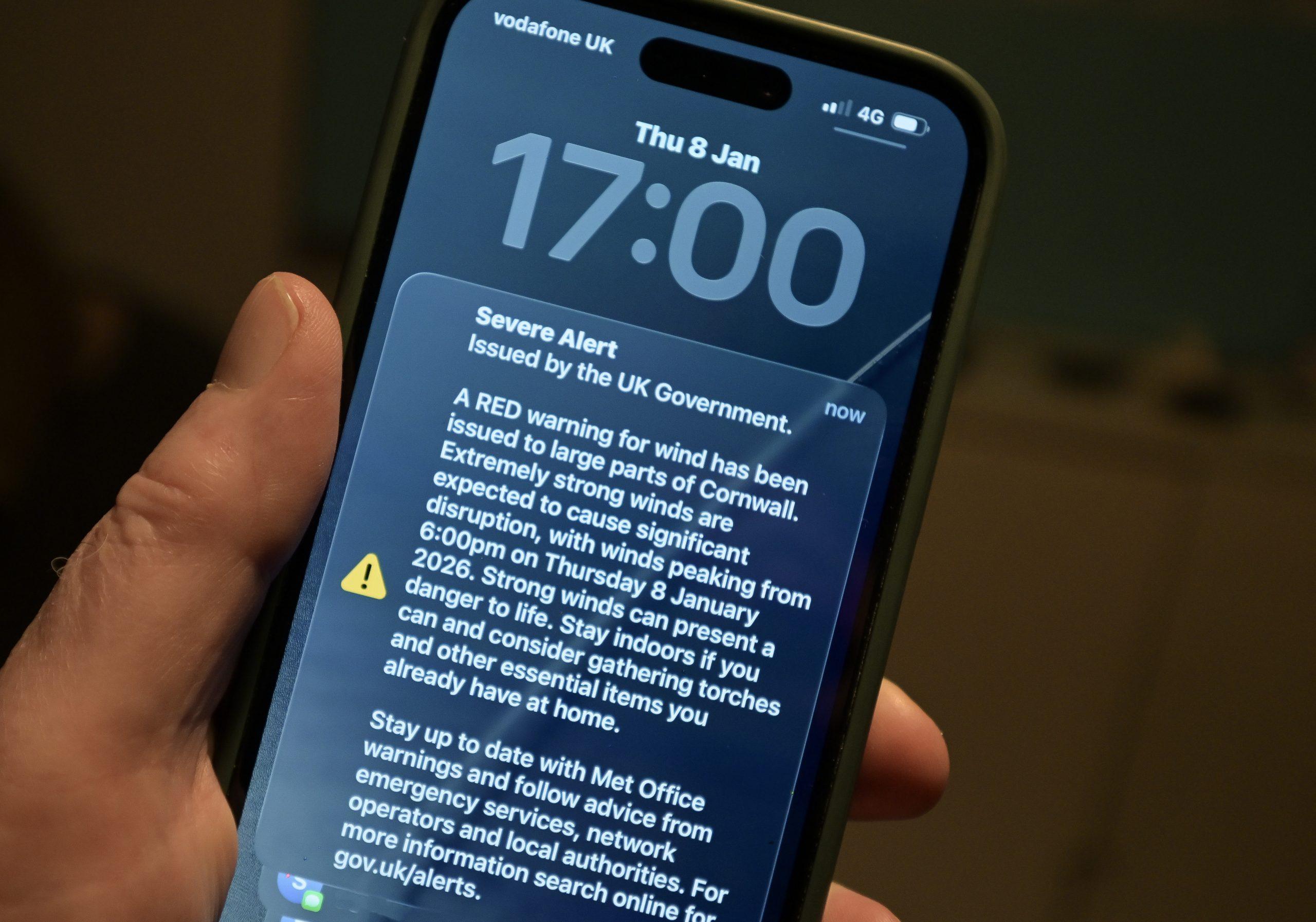
In an unprecedented move to protect public safety, around half a million people received emergency alerts, with the first sent to people living in the Isles of Scilly at around 3pm and the second alert issued by the Cabinet Office to people living in Cornwall at about 5pm on Thursday, 8 January 2026. This marked the fifth set of emergency alerts the government has issued to alert residents of adverse weather conditions, demonstrating the severity of Storm Goretti’s threat to the region.
Understanding the Red Warning System
A RED warning for wind was issued to large parts of Cornwall, with extremely strong winds expected to cause significant disruption, with winds peaking from 6:00pm on Thursday 8 January 2026. The Emergency Alert system sent a message to every compatible mobile phone in the impacted areas, containing information about the red warning and guidance on how to stay safe. Compatible mobile phones made a loud siren-like sound even if they were set on silent, with the sound and vibration lasting for about 10 seconds.
Storm Goretti’s Devastating Impact
The alerts were issued as Storm Goretti brought 100mph winds and as much as 30cm of snow to some parts of the UK. More than 25,000 properties were without power in south-west England, with the number of premises off supply exceeding 25,000 at just after 7pm on Thursday. Storm Goretti caused major disruption across parts of Cornwall, particularly to roads, coastal areas and local infrastructure.
Significance for Public Safety
The emergency alerts represent a critical development in the UK’s approach to severe weather preparedness. The alerts sent to all mobile phones registered in the area warned people to stay indoors while the winds passed and to gather torches and other essential items. This system ensures that residents receive timely, direct warnings during life-threatening weather events, enabling them to take immediate protective action. The coordinated response between the Cabinet Office, Met Office, and local authorities demonstrates the importance of multi-agency cooperation in managing extreme weather emergencies, a capability that will become increasingly vital as climate patterns continue to evolve.