

AccuWeather: How the service shapes weather information and planning
Introduction — Why AccuWeather matters
AccuWeather plays a central role in how millions of people and organisations access weather information. As a long-established commercial forecaster, it delivers forecasts, alerts and specialised services that influence daily decisions, travel, agriculture, and emergency planning. Understanding what AccuWeather offers and how it operates helps readers assess the reliability and relevance of the weather information they rely on.
Main body — Services, background and capabilities
Background and reach
Founded in 1962 by meteorologist Joel N. Myers, AccuWeather is headquartered in State College, Pennsylvania. The company supplies weather content and data to media outlets, businesses and consumers around the world. Its products range from free consumer-facing apps to bespoke enterprise solutions for sectors such as aviation, energy and retail.
Key features and technologies
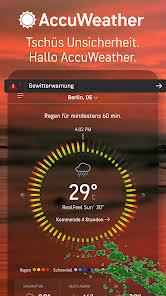
AccuWeather is known for several branded offerings: MinuteCast, which provides minute-by-minute precipitation forecasts for specific locations, and RealFeel, a trademarked index intended to capture perceived temperature by accounting for multiple atmospheric factors. The company combines public sources—such as satellite and radar networks—with proprietary models and analytics to produce forecasts at national, regional and local scales. Mobile apps for iOS and Android, web services and APIs are central distribution channels.
Applications and users
Consumers use AccuWeather for everyday planning—commuting, events and travel—while businesses integrate its data to manage weather-related risk, optimise operations and inform logistics. Emergency services and local authorities also rely on timely forecasts and alerts to prepare for severe weather episodes.
Conclusion — Significance and outlook
AccuWeather remains a prominent commercial provider in a landscape where demand for accurate, hyperlocal and timely forecasts is growing. Advances in computing power, higher-resolution models and increased use of machine learning are shaping the broader forecasting industry; services such as AccuWeather are likely to continue evolving their products to meet needs for greater precision and faster delivery. For readers, the practical takeaway is to combine trusted forecast sources, understand the strengths of different forecast products, and use weather information proactively in planning and risk management.