Introduction — Why Lanzarote weather matters
Lanzarote weather is a key consideration for residents and the island’s large number of visitors. As one of the easternmost Canary Islands, Lanzarote is prized for its mild climate, long sunshine hours and limited rainfall. Understanding typical conditions helps travellers plan activities such as beachgoing, hiking in volcanic landscapes, water sports and vineyard visits, and it informs local agriculture and infrastructure planning.
Main climate features
General climate
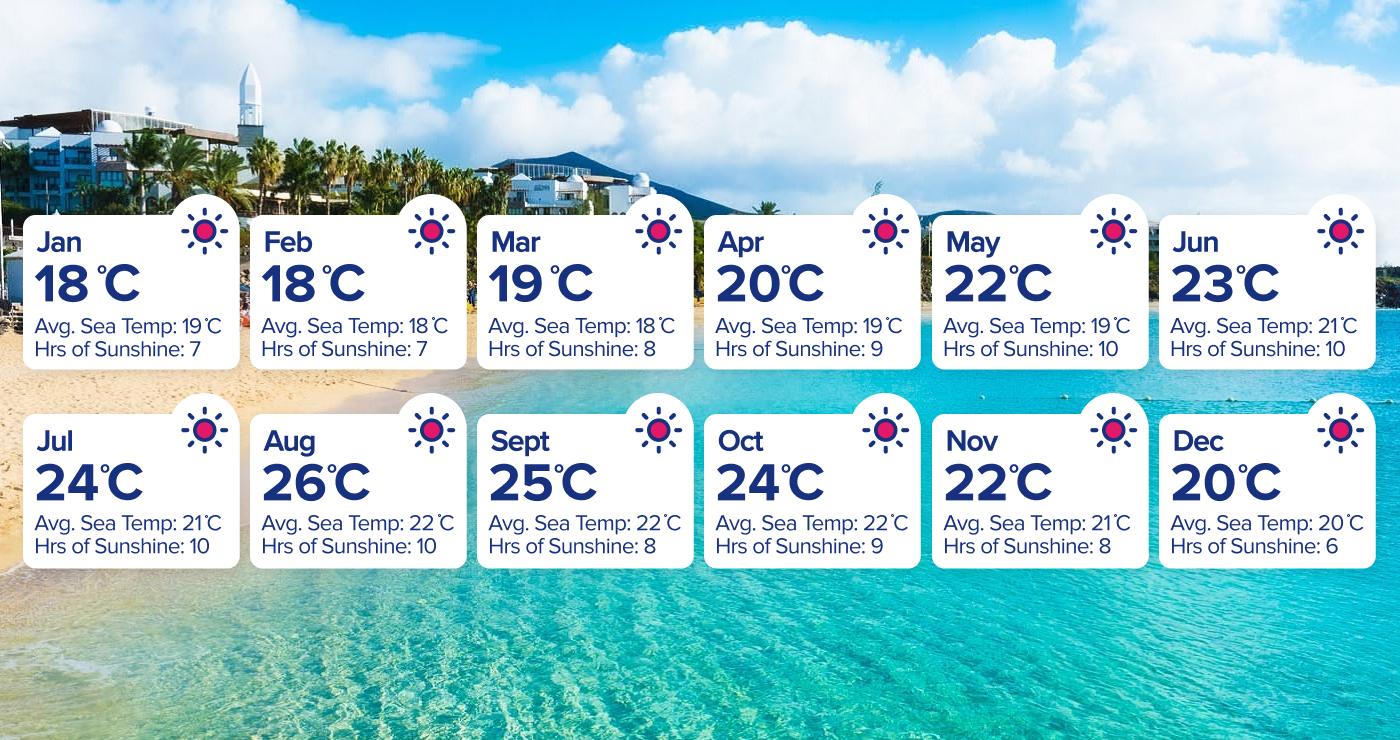
Lanzarote has a subtropical, arid climate with warm temperatures throughout the year. The island benefits from a maritime influence that moderates extremes: summer highs commonly reach the mid‑20s °C, while winter daytime temperatures generally sit in the high teens to low 20s °C. Nights are cooler but rarely cold.
Rainfall and sunshine
Rainfall is scarce and concentrated in the cooler months. Most precipitation falls between late autumn and early spring, with many months recording very little or no rain. Lanzarote enjoys abundant sunshine year‑round, making it an appealing destination for outdoor activities and tourism.
Winds and sea conditions
Trade winds from the northeast frequently influence conditions, bringing breezes that help keep temperatures comfortable. These winds also affect sea conditions; some coastal areas can be windier, which is favourable for windsurfing and kitesurfing. Sea temperatures vary seasonally but remain pleasant for swimming for much of the year.
Occasional phenomena
Occasionally, Lanzarote experiences a calima — a dust‑laden wind from the Sahara that raises temperatures, reduces visibility and can make air quality poorer for short periods. Such events are episodic and typically pass within a few days.
Conclusion — Practical takeaways and outlook
For most visitors, Lanzarote weather means reliable warmth, sunshine and limited rain, making it suitable for year‑round travel. Pack light clothing with a windproof layer, sun protection and sensible footwear for volcanic terrain. Watch local forecasts for short‑term events such as calimas or increased winds. Looking ahead, changing climate patterns may affect the frequency of heat events and rainfall variability, so staying informed remains important for residents and visitors alike.