Introduction: Why Dubai weather matters
Dubai weather shapes daily life, tourism and business in one of the world’s fastest‑growing cities. For residents, visitors and event planners, understanding seasonal trends is essential for health, logistics and enjoyment. This guide explains the typical climate patterns in Dubai and offers practical advice to help people plan activities and travel around local conditions.
Main body
Climate overview
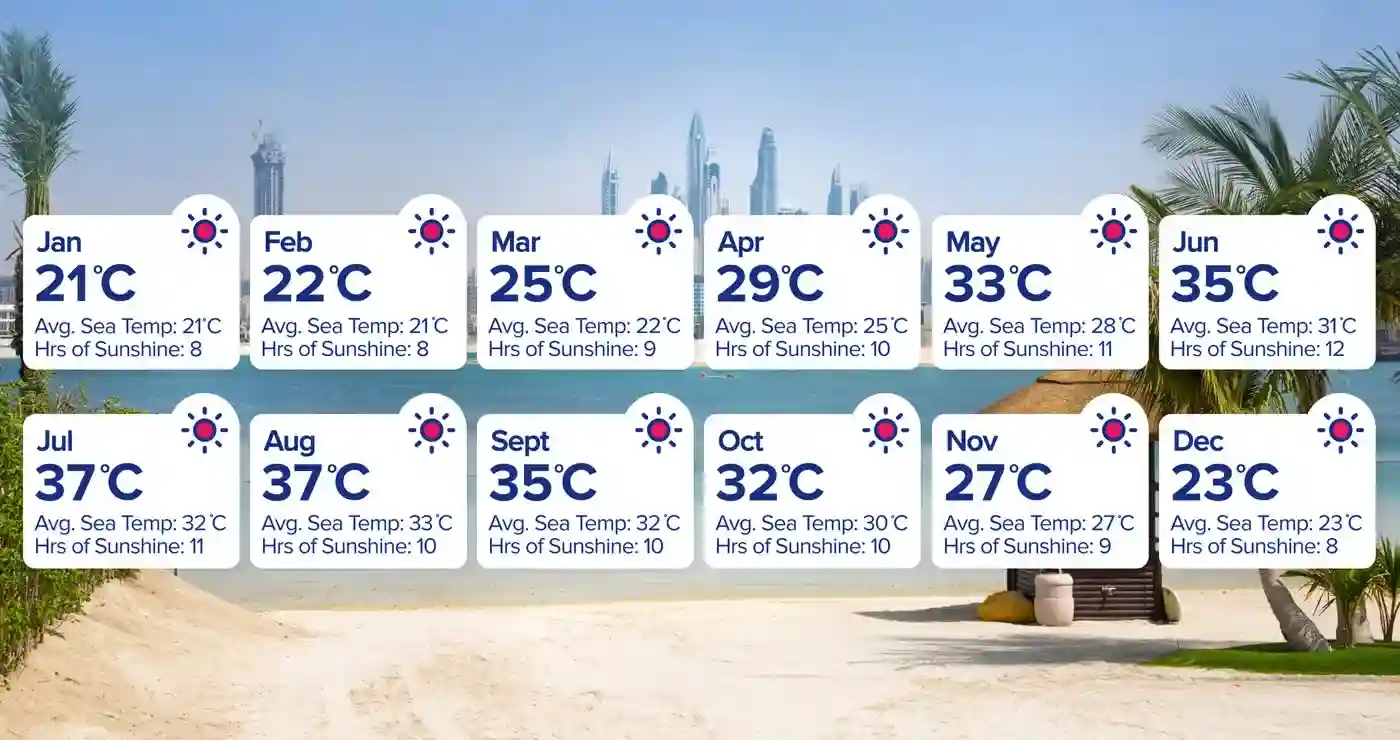
Dubai has a hot desert climate (Köppen BWh) characterised by long, very hot summers and short, warm winters. Sunshine is abundant for most of the year, while precipitation is infrequent and generally falls in the cooler months. The city’s coastal location in the Persian Gulf also influences humidity and sea temperatures.
Summer conditions
From late spring through early autumn, Dubai experiences very high daytime temperatures and elevated humidity, particularly close to the waterfront. This combination raises the heat index, making outdoor exertion uncomfortable and potentially hazardous without precautions. Many outdoor events are scheduled for early morning or evening during these months to avoid the peak heat.
Winter and transitional months
Winter months are milder and are considered the most pleasant time to visit. Daytime temperatures are comfortable and evenings are cooler, creating favourable conditions for outdoor dining, sightseeing and sporting events. Rain is rare but most likely in winter and during short, sometimes sudden, storms.
Impacts and practical considerations
Weather affects tourism flows, construction schedules and energy demand. High summer temperatures increase the need for cooling and heat‑safety measures, while the milder season attracts a larger number of visitors. Travellers should prioritise sun protection, hydration and timing outdoor activities outside the hottest hours. Local authorities issue guidance during extreme heat or dust events—staying informed is important.
Conclusion: What readers should take away
Dubai weather is dominated by a hot, sunny climate with minimal rainfall and clear seasonal contrasts. For most visitors, the best time to plan outdoor activities is in the cooler months, while residents and businesses adapt operations to cope with intense summer heat. Looking ahead, ongoing climate trends suggest heat and humidity may intensify, reinforcing the need for heat‑aware planning and public health measures.