

NATO Warplanes Scrambled as Russian Military Activity Intensifies Near Alliance Airspace
Rising Tensions on Europe’s Borders
NATO warplanes have been scrambled with increasing frequency in recent weeks as Russian military aircraft continue to conduct operations near alliance airspace. The latest incidents underscore mounting tensions on Europe’s northern and eastern flanks, with member states maintaining heightened alert levels to protect their territorial integrity. These defensive measures reflect a broader pattern of Russian aerial activity that has persisted since the invasion of Ukraine, testing NATO’s resolve and air defence capabilities.
Christmas Day Scramble and Recent Incidents
NATO scrambled fighter jets on Christmas Day after Russian Tu-95 strategic bombers conducted a long range patrol near Norway, with Russia’s Ministry of Defense saying two Tu-95MS nuclear capable bombers carried out a seven hour flight over the Norwegian and Barents Seas. NATO officials confirmed that allied aircraft were launched to monitor and escort the Russian planes while they flew near NATO controlled airspace, though no violations of sovereign airspace were reported.
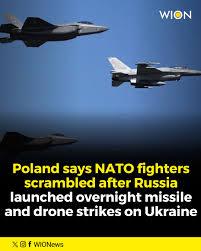
Poland has been particularly active in responding to Russian strikes on Ukraine. NATO member Poland scrambled fighter jets overnight as Russia launched strikes on Ukraine, Warsaw’s military said on Tuesday. The country also put ground-based air defense and radar reconnaissance systems on “the highest state of readiness” to protect NATO territory bordering Ukraine. These actions were “of a preventive nature” to secure the country’s airspace, “especially in areas adjacent to the threatened zones”.
Pattern of Russian Provocations
Russia’s aerial bombardment, particularly on sites close to NATO territory in western Ukraine, have frequently pushed the alliance to protect its airspace with fighter jets. Beyond bomber flights, there have been multiple airspace violations. Russian MiG-31 fighter jets violated Estonia’s airspace and remained there for 12 minutes in September, whilst roughly 20 drones crossed into Poland in September in what Prime Minister Donald Tusk said was a deliberate incident.
Significance for European Security
NATO routinely scrambles aircraft when unidentified or non communicating military planes approach alliance airspace. These intercepts are standard practice and are designed to identify aircraft, ensure flight safety, and signal presence rather than escalate tensions. However, the deployment of fighter jets and temporary airspace restrictions are occurring more often as several NATO nations report drone sightings and other airspace violations. The frequency of these incidents highlights the ongoing challenge NATO faces in maintaining air sovereignty whilst Russia continues military pressure on Ukraine and tests Western defences. For European nations, maintaining vigilance and rapid response capabilities remains essential to deterring potential aggression and protecting alliance territory.